01
Bottle feeding table
A rotary table receives manually placed bottles and feeds them automatically into the line.
An integrated bottle filling line for oil-water emulsions. Dual-head gear-pump filling and servo capping connect bottle feeding, round-bottle labelling, inkjet coding and collection in one production process.
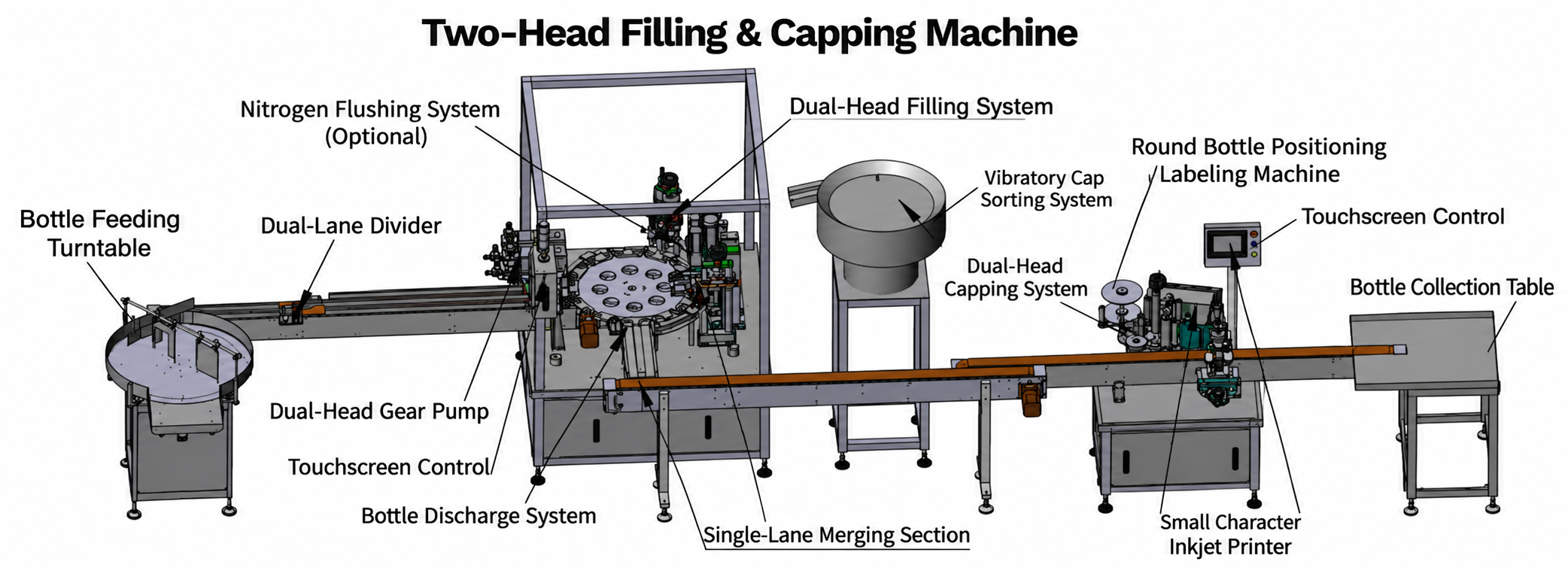
CONTACT USProposal F20261010-2A is designed for an emulsion made by mixing oil and water. Bottles enter from a rotary feeding table and divide into two lanes before reaching the integrated filling and capping unit.
Two gear-pump filling heads dispense the product. A vibrating bowl sorts and feeds the caps, and two servo-driven capping heads close the bottles. The discharge then merges into a single lane for round-bottle positioning labelling, small-character inkjet coding and collection.
Dual-head nitrogen flushing can be added as a customer-selected option. This option requires a nitrogen cylinder supplied by the customer.
The line photograph shows COTECH filling equipment. The engineering drawing below defines the proposed arrangement for this emulsion project; final dimensions and appearance may differ from the drawing.
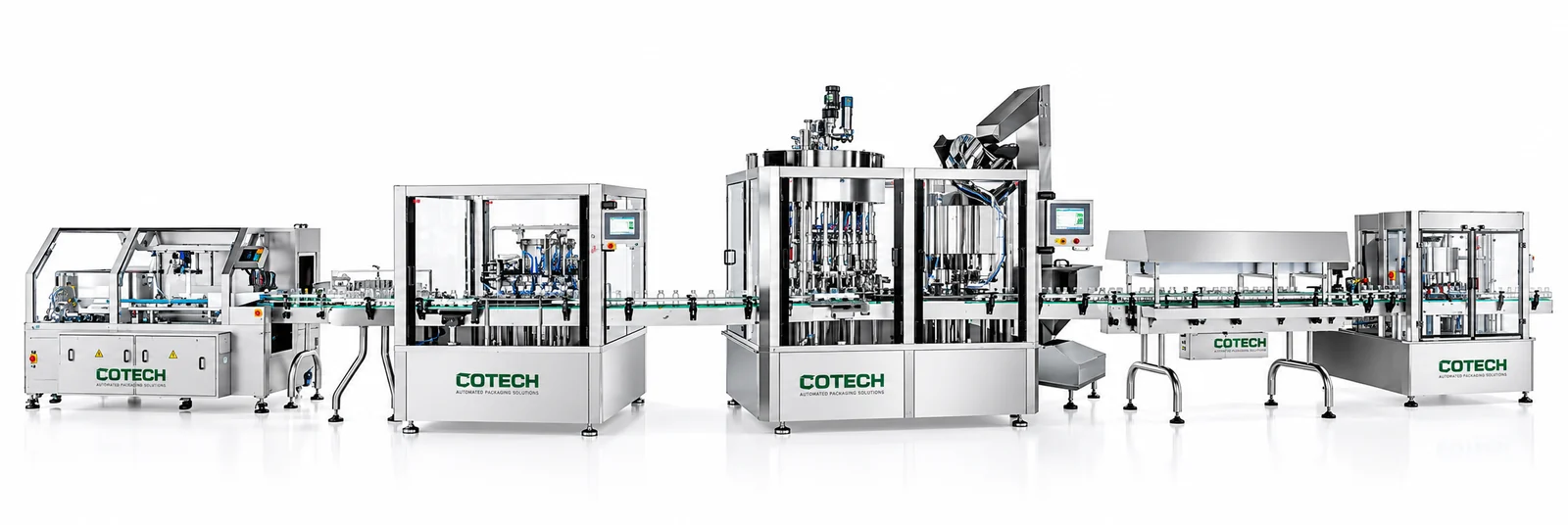 COTECH / LIQUID FILLING LINE
An integrated emulsion filling line with dual-head filling and capping, followed by round-bottle labelling, inkjet coding and collection.
A rotary table receives manually placed bottles and feeds them automatically into the line.
Two infeed lanes deliver bottles to the indexing plate for filling through two gear-pump heads.
A dual-head nitrogen mechanism can be fitted. The customer supplies the nitrogen cylinder.
A vibrating bowl sorts the caps and supplies them to the capping unit.
Two servo-driven heads cap bottles within the integrated filling and capping machine.
The bottle discharge mechanism merges the two lanes for downstream handling.
A positioning labeller applies labels to round bottles.
A small-character inkjet coder is included in the proposed equipment layout.
Finished bottles arrive at the collection worktable for manual collection.
Specified for the oil-water emulsion in this proposal.
Electrical supply: 230 V / 50 Hz, as specified in the customer proposal.
Nitrogen flushing: optional dual-head mechanism, with a customer-supplied nitrogen cylinder.
Control: touchscreen operation for the filling and capping equipment and downstream labelling unit.
Layout: final dimensions and appearance may differ from the drawing. Please share any factory space restrictions before the equipment design is finalised.
Two filling lanes feed the integrated filling and capping unit, then merge into one lane for the downstream equipment.
Place bottles manually on the rotary feeding table.
Feed bottles from the rotary table into the conveyor.
Guide bottles into two lanes and onto the indexing plate.
Fill the emulsion using the dual-head gear-pump system.
Flush through the optional dual-head nitrogen mechanism.
The vibrating bowl sorts caps and feeds them to the capping station.
Close the bottles with the dual-head servo capping mechanism.
Discharge bottles onto the single-lane downstream conveyor.
Apply labels with the round-bottle positioning labeller.
Code bottles with the small-character inkjet coder shown in the equipment layout.
Receive bottles at the collection worktable, then collect them manually.
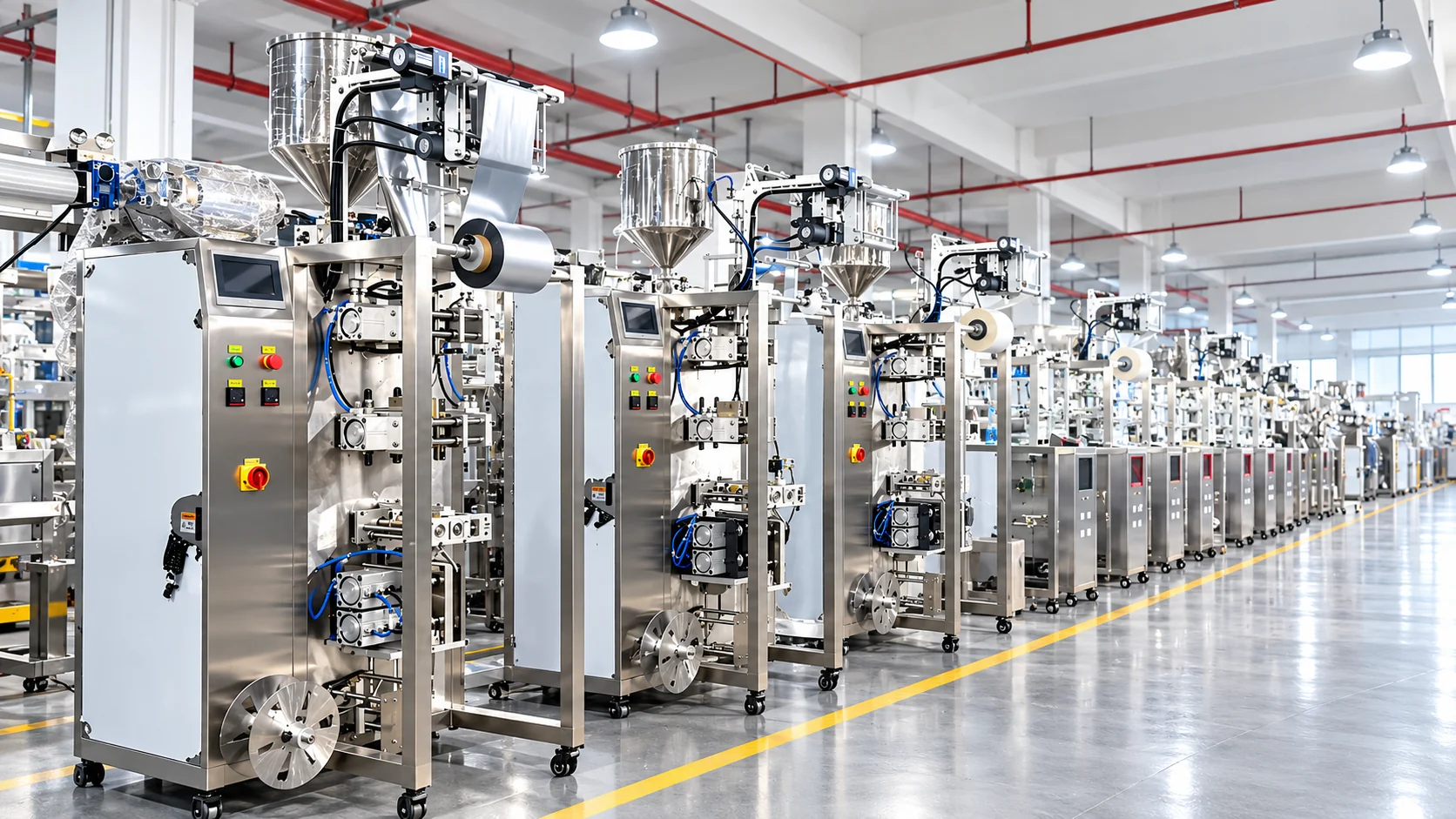
Tell us about your liquid, bottle and filling requirements. Our team will review your project and recommend a suitable configuration.