Introduction: choose around the powder, then the machine
The right powder stick pack machine is the one that can dose your actual blend consistently, keep powder out of the seals and deliver enough accepted packs for your production plan. Start with representative product and film trials, then select the dosing system, lane count, cleaning arrangement and downstream equipment.
Electrolyte mixes and nutritional supplements may look similar in a sample photograph, yet behave differently in a hopper. A blend containing fine mineral salts can respond differently to humidity and handling than a fluffy protein mixture. Flavor carriers, particle size and the way the blend settles also affect filling. A machine selected only by nominal speed or advertised fill range may therefore leave important application questions unanswered.
This guide is for supplement brands, contract packers and production teams comparing equipment before an overseas purchase. It explains what to specify, what to observe during factory testing and which questions help turn a general quotation into a useful technical discussion. It does not assign a universal accuracy or speed to every powder.
1. Describe the blend's behavior, not just its product name
Flow, bulk density and settling
Ask whether the powder pours freely, forms a bridge above the dosing inlet or sticks to contact surfaces. Record loose bulk density using a defined method, and explain whether the material becomes denser after transport or vibration. The relevant question is how the product behaves between a freshly filled hopper and the end of a production run.
An auger delivers a volume of material through screw rotation. The mass associated with that volume depends on the powder presented to it. Published research on lactose feeding demonstrates why changes in bulk density can matter to volumetric feeder performance. This is a feeding principle, rather than a prediction of accuracy for a finished supplement stick pack.
Moisture, dust and ingredient separation
Identify whether the blend absorbs moisture, produces airborne dust or separates during transfer. Explain normal room temperature and relative humidity, along with how long an open batch remains in the hopper. An electrolyte formulation that flows well in a sealed sample container may behave differently after extended exposure in the customer's plant.
Do not assume that a stable total pack weight proves uniform distribution of a low-dose ingredient. Blend homogeneity and ingredient segregation require their own assessment by the product manufacturer. Where allergen control or combustible dust is relevant, include those requirements in the project specification and have the applicable engineering assessment completed.
2. Build a representative sample brief
For a useful product application trial, supply the intended commercial formulation whenever possible. If a substitute powder is necessary, record how its flow, particle size, density and moisture behavior differ. A successful demonstration with an easy-flowing substitute should not silently become acceptance evidence for a difficult finished blend.
- Product identity and relevant physical properties, with confidential ingredients handled through an agreed process.
- Minimum, nominal and maximum target dose, plus the buyer's acceptable weight limits.
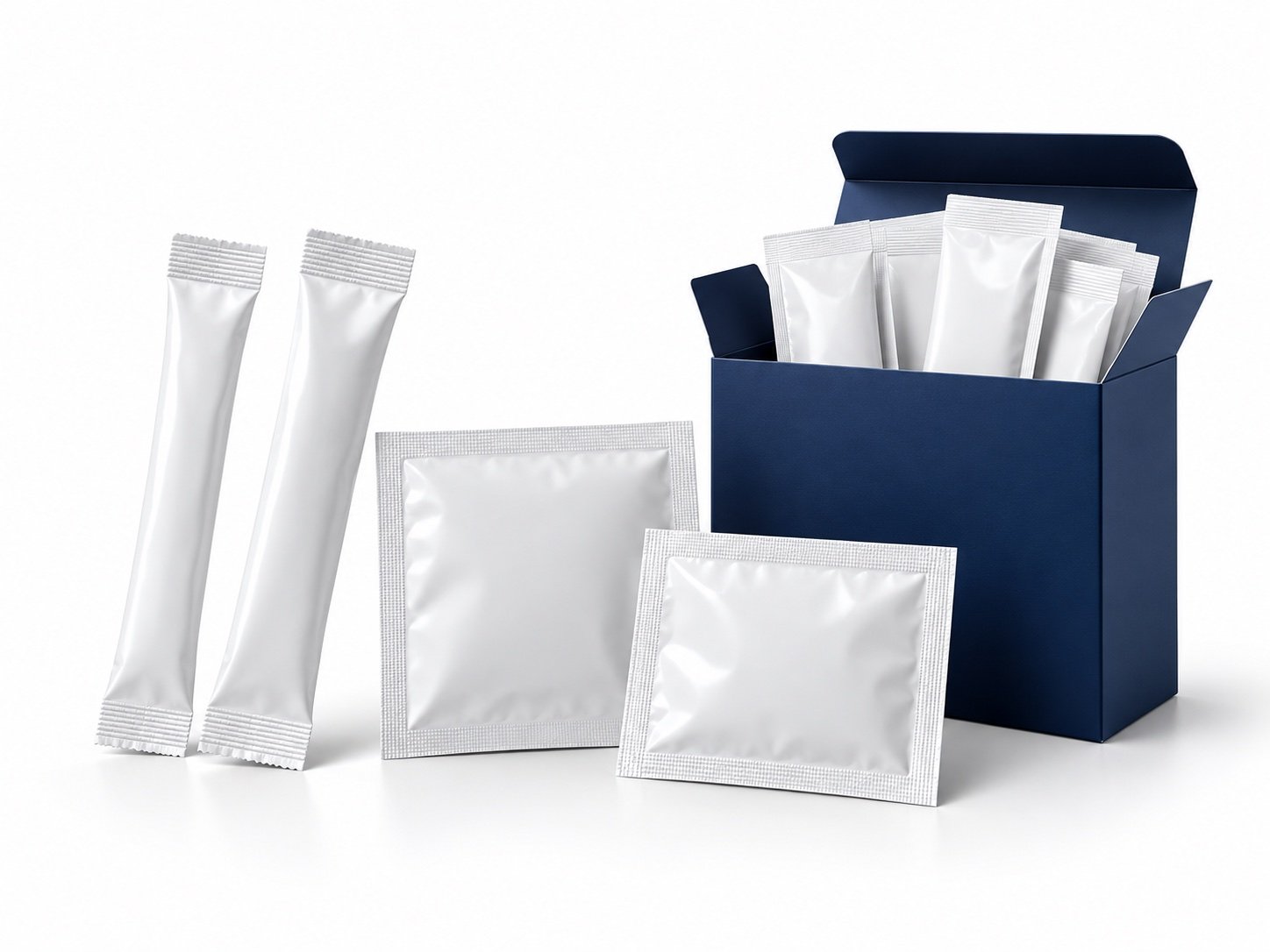
- Proposed stick width, length, seal style and opening feature.
- Film construction, thickness, roll dimensions and printed registration marks.
- Required accepted packs per shift and the expected number of product changeovers.
- Cleaning requirements, utilities and any downstream counting, cartoning or inspection steps.
Agree the sample quantity with the supplier rather than sending an arbitrary small bag. The trial needs enough material to establish settings, collect useful measurements and observe hopper refilling. Keep a retained sample and record the batch identification so later comparisons have a clear reference.
3. Compare the dosing system against the application
When auger dosing is worth evaluating
Auger dosing is commonly evaluated for powder stick packs because screw geometry and controlled rotation can meter a range of powder products. The correct screw, agitation arrangement and discharge geometry still depend on the formulation. Fine, cohesive powders and freely flowing powders should not automatically share the same tooling or settings.
Discuss how the machine maintains a stable supply at each dosing inlet. During factory testing, observe the effect of low hopper level, a refill and a restart after a short pause. If dosing depends on stable product presentation, a carefully tuned initial run alone will not answer what happens during a normal shift.
Weight feedback and inspection are separate decisions
A checkweigher can provide downstream weight inspection, and some configured systems can feed corrections back to a filler. Ask whether that function is included, how samples are associated with individual lanes and what happens when the instrument rejects a pack. The existence of a feedback option does not mean every quoted machine includes it.
Confirm the measuring method before discussing an accuracy figure. Gross pack weight includes film; net product weight requires an appropriate tare method. A buyer also needs to distinguish target-setting error, variation between individual packs and differences between lanes. One aggregate average can hide a poorly performing lane.
| Decision | Evidence to request |
|---|---|
| Auger and agitation | Trial settings and observations using the intended blend |
| Hopper supply | Results before and after refilling, including low-level operation |
| Weight inspection | Instrument scope, sampling method and reject handling |
| Lane consistency | Measurements identified by lane and production condition |
4. Treat packaging film and seal quality as part of machine selection
A powder that is dosed correctly can still produce an unacceptable pack if dust enters the seal area. Observe the timing of powder release relative to jaw closure, and inspect both longitudinal and end seals. A visually attractive sample is useful, but the acceptance plan should also address the defects that matter to transport, storage and consumer use.
Barrier requirements come from the product's stability needs and the validated package design. Ask the film supplier for relevant moisture or oxygen barrier information and confirm the sealant layer's operating window. Do not select a laminate solely because another nutritional product uses a similar-looking stick.
Seal strength and leakage are different measurements. ASTM F88/F88M addresses seal strength of flexible barrier materials; it does not supply a universal pass value for every supplement package. The buyer and relevant specialists should select suitable methods and acceptance limits for the actual film and application.
Include opening behavior, tear position, printed registration and coding in the evaluation. A tear feature that damages the seal or a lot code that becomes unreadable after handling can create problems even when filling is stable. Use production-intent film for the final agreed trial wherever practical.
5. Choose lane count using accepted output
Lane count is a capacity decision, but more lanes also increase the number of dosing positions, sealing paths and components that must remain consistent. Compare the output of acceptable finished packs under the specified product conditions. Ask whether the quoted rate is per lane, per machine cycle or total packs per minute.
A worked planning example
Suppose a buyer needs 24,000 accepted sticks in a shift and expects 300 minutes of actual packaging time after planned breaks, setup and cleaning. The required average is 80 accepted sticks per operating minute. These are hypothetical planning inputs, not a COTECH machine specification or a promise of achievable output.
Use that requirement to discuss a realistic production configuration and contingency allowance. Check whether the line's counting, cartoning or manual collection stage can handle the proposed rate. Avoid applying the same assumed efficiency factor to every product and machine; use agreed trial evidence and the buyer's production schedule.
Account for the product mix
A plant running one stable formulation for long batches has different needs from a contract packer changing flavors several times a day. Ask how long a changeover takes under an agreed definition, which components must be removed and which settings are stored. Cleaning and startup losses belong in the capacity calculation.
Consider the smallest planned dose and the bulkiest planned powder when reviewing pack size. A fixed stick geometry may not suit the entire range. Confirm whether alternative tooling, forming components or roll widths are required, and separate included change parts from future options in the quotation.
6. Review cleaning access and installation preparation
For supplements, changeover decisions often depend on how product-contact components can be inspected, removed, cleaned and dried. Ask to see the access procedure for the hopper, auger, discharge components and nearby collection surfaces. A parts list is more useful when paired with a demonstration of the required operator tasks.
Define whether cleaning will be dry, wet or a documented combination. Water-sensitive ingredients can make residual moisture a concern, while allergen changes may require a validated cleaning procedure. Do not assume that stainless steel construction alone establishes hygienic suitability or proves cleaning effectiveness.
Before shipment, confirm electrical supply, compressed air requirements, space around the machine and the route from unloading point to installation area. Ask which extraction, environmental control or product-transfer equipment is included. A layout drawing should show service access as well as the production footprint.
7. Make the factory trial answer purchasing questions
Agree a written trial plan before the demonstration. It should identify formulation, film, dose, run conditions, measuring equipment and the acceptable outcomes. Include startup, steady running, hopper refill and a controlled stop and restart. Record adjustments so the final successful settings can be reproduced.
Collect measurements across every lane at defined points in the run. Retain representative packs, photograph relevant defects and document the disposition of rejected output. If the supplier changes the auger, film or operating speed during the trial, note the change rather than comparing all samples as though they came from one condition.
Review the results with operations and quality teams, not procurement alone. A satisfactory trial should support the agreed product application and acceptance criteria. For a broader export inspection framework, see the packaging machine factory acceptance test checklist.
8. Compare the purchase scope and operating costs
Place quotations beside the same product brief and check the boundaries of each offer. One proposal may include product feeding, coding and pack discharge, while another leaves those items to the buyer. Identify included tooling, commissioning support, spare parts and training. Price comparisons become more useful when both offers describe the same production task.
Giveaway and rejected packs belong in the evaluation
Product giveaway is the amount filled above the intended target, while rejects are finished units that fail an agreed requirement. Reducing one by simply accepting more of the other is not necessarily an improvement. Review fill distribution alongside seal quality and accepted output, and keep product release decisions with the buyer's quality team.
As a hypothetical cost illustration, an average excess fill of 0.1 gram across 100,000 sticks represents 10 kilograms of additional product. This arithmetic does not establish a machine's typical giveaway or predict savings. A purchasing team needs actual trial data, product cost and accepted limits before comparing operating economics.
Ask how support will work after delivery
Confirm the language and format of manuals, the proposed training scope and the procedure for requesting technical support. Ask which spare parts are recommended for initial operation and how a replacement component is identified. An overseas plant benefits from clear photographs, part numbers and an agreed communication route when diagnosing a problem.
Separate machine ownership costs from marketing claims about return on investment. Product mix, labor arrangements, utilities, cleaning time and downstream handling vary between plants. A supplier can explain the configuration and demonstrated conditions, but the buyer should build the business case using its own operating assumptions.
Finally, document any requirements that remain open: alternative formulas, a future carton format or a larger dose may need further evaluation. Recording those boundaries protects the purchasing decision and gives both teams a practical starting point when the application changes.
Frequently asked questions
Can one stick pack machine run electrolyte, protein and vitamin powders?
It may be possible with suitable dosing tooling, settings and pack sizes, but the product names are not enough to confirm it. Test representative formulations, including the most difficult powder and smallest intended dose. Identify any required change parts and cleaning procedures before treating the machine as suitable for the full range.
How many lanes should a supplement brand choose?
Choose from the required accepted output, available operating time, product mix and downstream capacity. Ask for total machine output with your product rather than multiplying an unrelated headline speed by lane count. A smaller machine with practical changeovers can be appropriate for some businesses, while sustained higher demand may justify additional lanes.
Does an auger filler guarantee the same weight in every stick?
No. Product density, supply consistency, screw selection and operating settings influence the result. Define acceptable net-weight limits and inspect data by lane and running condition. Where downstream weight inspection is required, specify it explicitly rather than assuming it is part of the base machine.
Should we send packaging film before ordering?
Production-intent film is valuable because forming, registration, sealing and opening behavior depend on it. If printed film is unavailable, agree what a substitute trial can demonstrate and what still needs confirmation. Film supplier information should accompany the sample, especially when moisture protection is important to the product.
Can a successful machine trial establish supplement shelf life?
No. A trial can demonstrate the agreed packaging process and provide sample packs for further work. Shelf life also depends on formulation, package barrier, storage and the product owner's stability program. Keep those responsibilities separate from a supplier's mechanical performance demonstration.
What should an overseas buyer send for a first quotation?
Send product characteristics, dose range, proposed stick dimensions, film information, required output and site utilities. Explain cleaning and downstream requirements. The quotation preparation guide provides a starting brief, while the powder stick pack machine page connects these questions to COTECH equipment discussions.
Conclusion: buy a demonstrated application fit
For electrolyte and supplement powders, machine selection should connect formulation behavior, dosing, film, accepted output and cleaning. The most useful comparison is a documented trial using relevant materials and clearly defined limits. A quotation becomes easier to assess when it explains what is included, what has been demonstrated and what still requires confirmation.
Begin with a focused product brief and involve the people who will operate and release the packed product. That preparation helps an overseas buyer compare configurations on practical production requirements rather than a machine photograph or a single speed figure.
Plan your powder stick pack project
Send COTECH your formulation characteristics, target dose, pack dimensions, film information and required accepted output. Ask which product trials and line configuration should be included in your quotation.
Get a Quote