
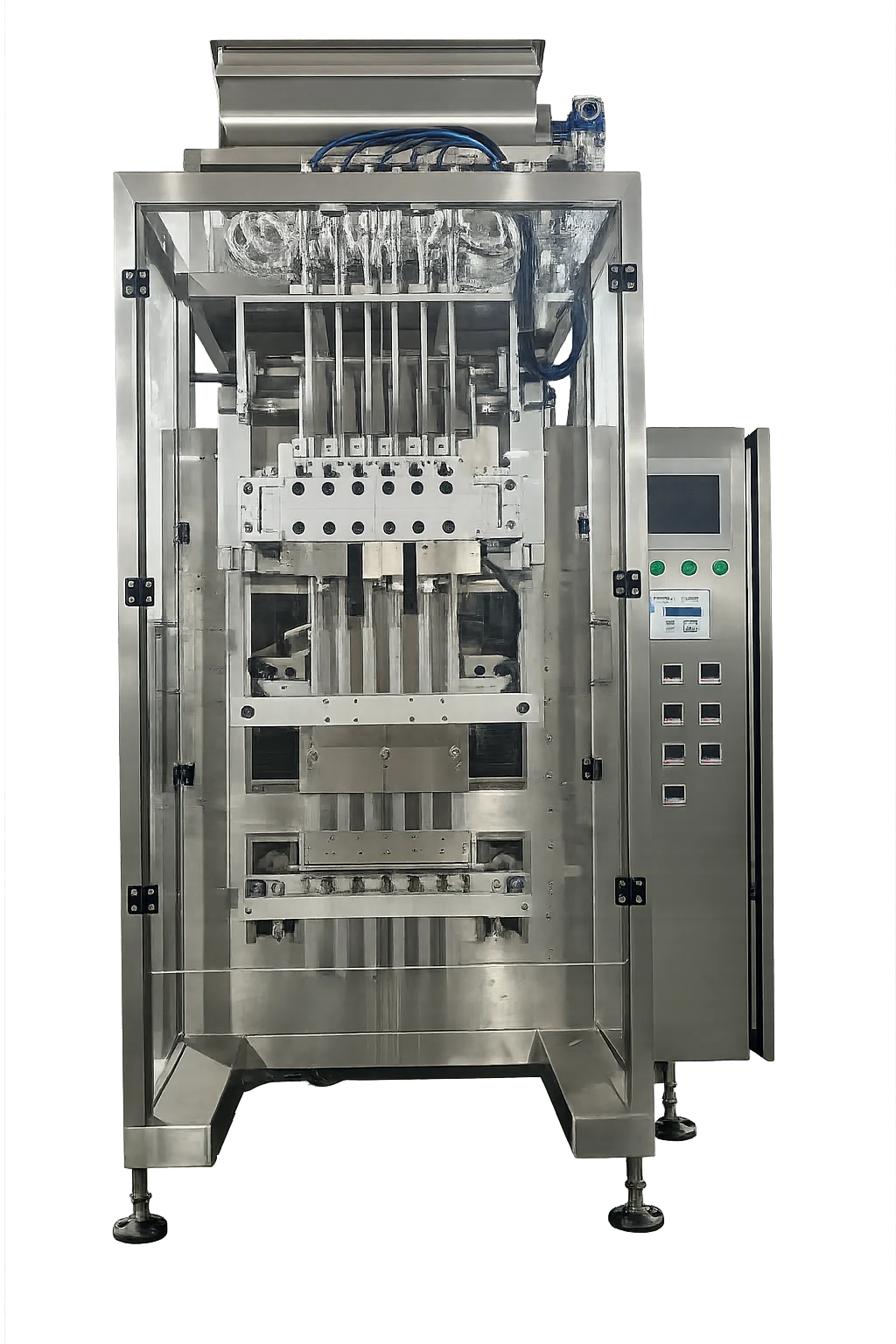
Introduction: evaluate filling and sealing together
A liquid stick pack machine should be selected around the actual product's flow, filling temperature, target portion and packaging film. For honey, gels and beverage concentrates, verify repeatable dosing, clean nozzle shutoff and acceptable seals in the same trial. A machine that fills correctly can still produce unacceptable sticks if product reaches the sealing area.
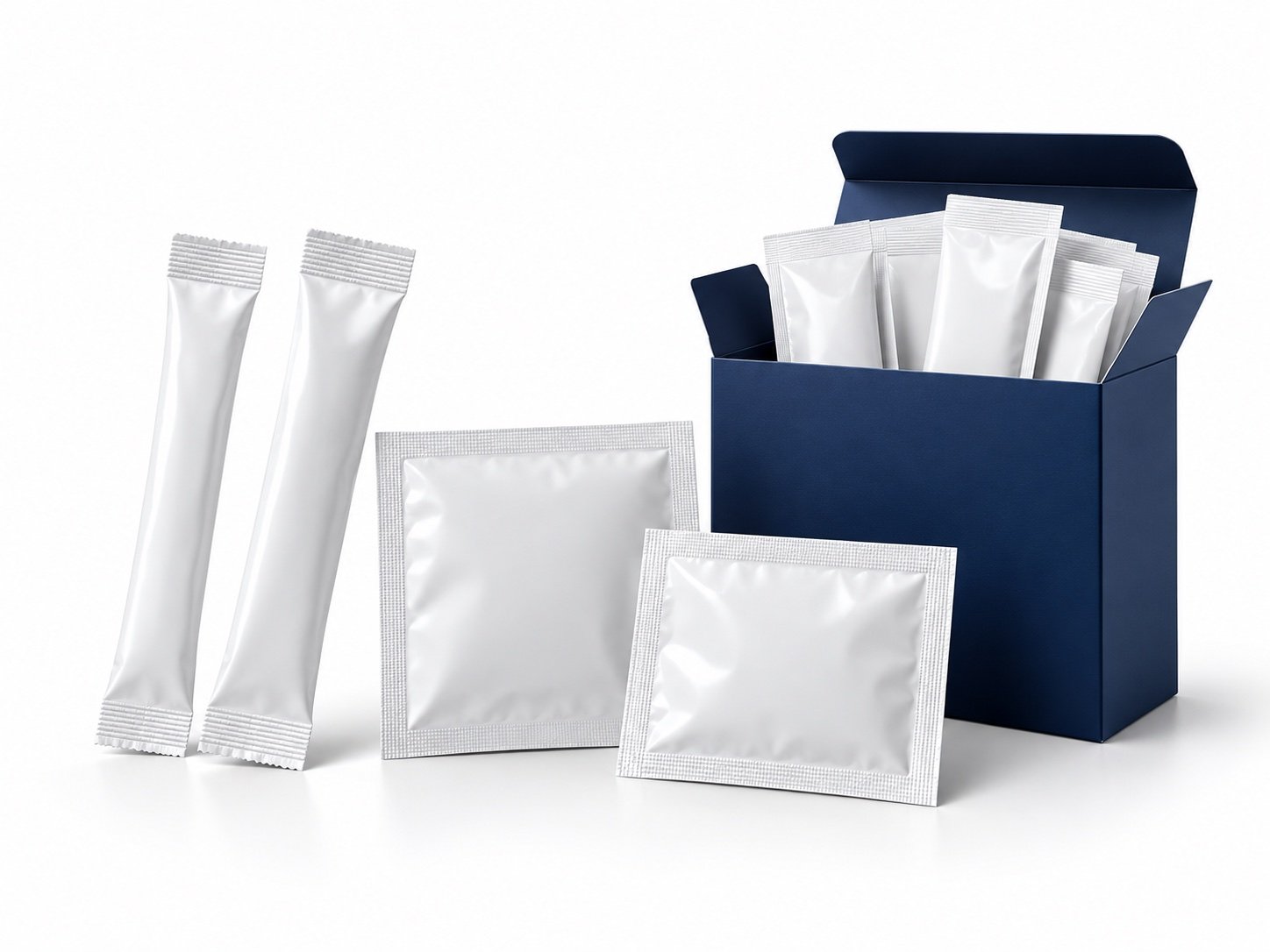
Single-serving liquid sticks can support food service, sports nutrition, beverages and other measured-dose applications. The narrow format can be convenient, but convenience depends on the finished pack as well as the machine. The consumer must be able to open it, dispense the portion and handle it without an unintended leak.
This guide is for brands, contract packers and plant teams considering an overseas purchase. It explains how to prepare customer requirements and what to observe during factory testing. It does not assign one filling system, operating temperature or speed to every product sold as honey or gel.
1. Confirm that the stick format fits the use
Start with the intended portion and consumer action. A honey serving added to a drink, a gel consumed during exercise and a concentrate mixed into water have different dispensing and opening requirements. Share how the pack will be carried, displayed, opened and emptied.
Define stick width, length, opening feature and any grouping into cartons or strips. A narrow pack that appears attractive in a drawing may leave too little room for the required portion and seal geometry. Test the finished pack with representative users or an agreed handling procedure before treating the shape as final.
Distinguish product examples from proven compatibility
COTECH's liquid stick pack machine page discusses sauces, honey, gels and liquid supplements as application directions. The retail packaging references on that page illustrate formats; they are not statements that those brands are COTECH customers. Your own recipe and film still need assessment.
If the desired portion or opening experience does not suit a stick, compare a wider sachet before committing to tooling. The purchasing objective is a usable single-serving package, not a particular shape at any cost. Document the format decision so machine, film and carton suppliers work from the same brief.
2. Describe the liquid under filling conditions
Honey: temperature and supply behavior
Honey can change its flow behavior with temperature and product condition. Explain the temperature expected at the machine, how product reaches the tank and whether crystals or other solids may be present. A sample stored in a warm office may not represent the material delivered to a cooler production area.
Viking Pump's honey application information discusses temperature as a consideration in honey transfer. That is general pump guidance, not a stick pack machine specification. Any heating arrangement should be reviewed against product quality requirements and the actual feeding and filling configuration.
Gels: viscosity, aeration and sensitivity
For gels, describe the measurement method and temperature beside any viscosity value. Some products behave differently under shear or after resting. Explain whether mixing introduces air and whether pumping, recirculation or holding time can alter the product. The supplier needs that information to propose a meaningful test.
If the gel contains suspended ingredients, specify particle size and relevant handling concerns. Product passage through valves and nozzles must be assessed against the formulation. A smooth demonstration gel cannot establish compatibility with a recipe containing particles or a different thickening system.
Beverage concentrates: flow and foaming
For concentrates, report whether the product foams, contains pulp or has components relevant to contact-material selection. Identify the normal batch condition and filling temperature. Water-like appearance does not prove water-like behavior during rapid dispensing, and a water trial cannot answer every formulation question.
3. Prepare product, film and portion information together
Send a representative formulation and agree the quantity required for setup, steady running and retained samples. Label the batch and storage conditions. Where a substitute is necessary, list its differences and identify what the trial will leave unconfirmed.
- Product identity, relevant flow behavior and viscosity measurement conditions.
- Filling temperature range and the proposed product supply method.
- Minimum, nominal and maximum portion, with clear mass or volume units.
- Stick geometry, seal style, opening feature and intended consumer use.
- Film structure, thickness, roll dimensions and printed registration details.
- Required accepted output, planned changeovers and downstream pack count.
- Cleaning method, destination utilities and acceptance evidence.
Confidential ingredients can be discussed through an agreed process. However, removing every relevant property from the enquiry can make a proposed configuration unreliable. Share enough information to evaluate compatibility and testing without assuming that a general product category resolves the engineering questions.
4. Review the complete filling path
Ask how product moves from the supply container to the final nozzle. A proposal may use a configured pump, piston or another metering arrangement. The appropriate choice depends on dose, flow, sensitivity, product supply and cleaning. Request the actual measuring principle and included components rather than accepting a generic phrase such as liquid filling system.
Clarify what controls the portion
Identify whether the system meters by displaced volume, calibrated rotation, time or a configured measurement device. Confirm the intended range and adjustments. If a weight instrument or feedback function is important, specify it explicitly; do not assume that it is included because the equipment has an HMI.
When a trial uses weighing to assess a volume target, agree the density and temperature basis. As a hypothetical example, a liquid with a measured density of 1.25 grams per milliliter would have a volume of 16 milliliters at a 20-gram portion under those measurement conditions. These are illustrative inputs, not typical honey properties or a COTECH dosing range.
Inspect supply consistency
Observe low tank level, replenishment and restarting after a pause. Ask how air entering the filling path is handled and how operators recognize an unstable supply. Keep the trial's feeding arrangement in the acceptance record; a gravity-fed demonstration may differ from the customer's intended bulk transfer method.
5. Check nozzle shutoff and the sealing-area condition
Watch the product at the end of each fill. Honey and some gels can form a trailing strand; thinner liquids may drip or splash. Review the nozzle position, movement and timing relative to film advance and jaw closure. A neatly filled open container does not demonstrate the same behavior inside a moving stick pack.
Ask what shutoff, drip control or suck-back arrangement is proposed and what it changes about the process. Evaluate it with the intended formulation. A setting that controls a strand at one temperature may need review at another, and a configuration appropriate for one dose may not suit the smallest planned portion.
| Product behavior | What to inspect |
|---|---|
| Stringing | End-of-fill strand, nozzle timing and seal-area cleanliness |
| Foaming | Air content, fill behavior and package condition after settling |
| Temperature sensitivity | Repeatability across the agreed filling temperature range |
| Particles | Passages, interruptions and any change to the product |
| Sticky surfaces | Cleaning access and retained product in the wetted path |
6. Match film and sealing to the actual application
The film needs to suit both the product and the packaging process. Ask the film supplier for the structure, sealant information and relevant barrier characteristics. Shelf-life requirements belong to the product owner's stability and packaging program; the machine supplier cannot establish them from laminate appearance alone.
Evaluate film tracking, print registration and sealing with the intended material. Agree acceptable seal appearance, dimensions and appropriate integrity checks. Use trial samples from known conditions rather than mixing packs produced before and after an unrecorded temperature or timing adjustment.
Separate seal strength from leakage
ASTM F88/F88M addresses seal strength of flexible barrier materials. Strength and leakage answer different questions, and the method does not provide one universal pass value for every liquid stick. Select suitable methods and limits for the actual laminate and application with the relevant specialists.
Inspect product contamination around the seals alongside the measured results. Also review tear behavior, coding and handling after filling. A package may leave the machine with an acceptable appearance yet fail the buyer's opening or distribution requirement. Define those requirements before the final trial.
7. Choose output around the product mix
Compare accepted sticks per defined period, not an unrelated maximum machine rate. Liquid filling time, sealing conditions and portion size can influence the cycle. Confirm whether the quoted number is per lane or total machine output and identify the formulation used to support it.
Discuss the number of products and changes expected in a shift. A plant filling one concentrate for long batches may have different needs from a contract packer switching between honey, a gel and a flavored supplement. The cleaning and restart procedure belongs in the production schedule.
Do not assume every liquid shares one recipe
Different products may need different contact parts, nozzles, settings or film. Record included change components and separate future options from confirmed scope. If a larger portion needs different forming parts or a different filling arrangement, make that visible in the quotation before comparing prices.
For a broader explanation of usable output, use a capacity brief that includes available time and downstream demand. COTECH's stick pack machine category offers separate product directions; lane count alone should not be used to approve a machine for every material type.
8. Assess cleaning and installation preparation
Review the tank, hoses, metering components, valves and nozzles as one wetted path. Ask where product remains after draining and how operators access those locations. Sticky products can make a simple-looking assembly time-consuming to clean if access and removal procedures are unclear.
Provide intended cleaning agents and conditions so contact materials can be reviewed. Specify whether the planned process is manual or automated, and ask which functions are actually included. Stainless steel construction alone does not establish compatibility, cleanability or a validated cleaning result.
During installation preparation, confirm product supply, electrical configuration, compressed air, room conditions and service clearance. If heating or agitation is proposed, identify who supplies it and how its control boundary is defined. Do not assume that an upstream preparation task is included in the base packaging machine.

9. Define evidence before testing and shipment
A useful protocol identifies the formulation batch, film, portion, temperatures, active lanes and run conditions. Sample every lane at agreed points and record individual measurements. Include stable running, replenishment and an authorized stop and restart. Note all relevant adjustments.
Assess finished packs against the agreed dosing and package criteria. Retain representative samples, document rejects and record the unresolved items with owners and actions. For remote testing, show settings, measuring instruments and product behavior clearly enough that the witness can interpret the record.
Shipment inspection then checks the accepted equipment, change parts, accessories and documents against the purchased scope. Confirm the installation and training responsibilities before dispatch. The factory acceptance test guide explains why trial approval, shipment readiness and site acceptance are separate activities.
10. Keep finished samples tied to their trial conditions
Retained packs are useful only when their origin is clear. Identify the formulation batch, film roll, portion setting, filling temperature and relevant machine configuration. If adjustments were made during the trial, separate the sample groups so later observations can be connected to the conditions that produced them.
Review the package after normal handling
Include the handling sequence relevant to the project, such as collection, counting and insertion into the intended carton. Observe whether that sequence changes the pack or creates product contamination. Use appropriate documented methods for any formal transport or stability work rather than presenting an informal handling check as a shelf-life study.
Record who owns each remaining question. The film supplier may need to confirm laminate information, the product owner may need stability evidence and the machine supplier may need to repeat a nozzle or sealing trial. A shared open-item list is more useful than treating all package questions as one general machine issue.
Before accepting the final configuration, review the evidence with production and quality personnel. They should understand which materials were used, what was measured and which later site checks are required. This gives installation and startup a clear reference without inventing a history of successful commercial runs.
Frequently asked questions
Can one liquid stick pack machine package honey and energy gel?
Possibly, with a suitable configured filling path, nozzles, settings and pack sizes. However, the product names are insufficient to confirm it. Evaluate the actual formulations, cleaning method and film, then document the required changes. A successful trial of one product does not automatically approve the other.
Does honey always need heating before stick packing?
No universal temperature requirement applies to every project. Review the honey's flow under the intended production conditions and the product owner's quality limits. If temperature control is needed, define the equipment and responsibility. Do not borrow a transfer-process temperature from another application as a packaging instruction.
Why can a correctly filled liquid stick still leak?
Filling and package integrity are separate functions. Product in the seal area, unsuitable film, inconsistent sealing conditions or physical damage can affect the finished pack. Inspect the full process and use agreed package tests rather than assuming correct weight establishes a satisfactory seal.
Should we specify the portion in grams or milliliters?
Use the unit required by the product and commercial specification, and keep it clear throughout the enquiry and trial. If volume and weight are compared, agree the density and temperature basis. Entrained air and changing product conditions can make an unstated conversion misleading.
Can a water test replace a trial with the concentrate?
Water may demonstrate selected mechanical functions, but it cannot establish the concentrate's foaming, stickiness, compatibility or shutoff behavior. State the limitation and identify the remaining testing. Use representative product and production-intent film for final application acceptance wherever practical.
What should an overseas buyer include in the enquiry?
Include product behavior, viscosity conditions, temperature range, portion, stick dimensions, film, accepted output and product mix. Add cleaning requirements, utilities and the intended carton or collection method. Those details support a relevant proposal and make the acceptance discussion more concrete.
Conclusion: approve a complete liquid packaging process
A liquid stick pack project should connect the formulation, product supply, metering, nozzle behavior and film sealing. For honey, gels and concentrates, a relevant trial is more useful than a generic promise of accurate filling. It shows how the proposed configuration behaves under defined conditions and which questions remain.
Start with a practical application brief, involve the people responsible for product quality and agree the acceptance evidence before shipment. That preparation helps the buyer select equipment around a finished pack that works in production and in use.
Plan a liquid stick pack trial
Send COTECH your product behavior, filling temperature, target portion, stick dimensions and film information. Include cleaning, accepted output and destination utilities so the proposed configuration can be reviewed against your application.
Get a Quote