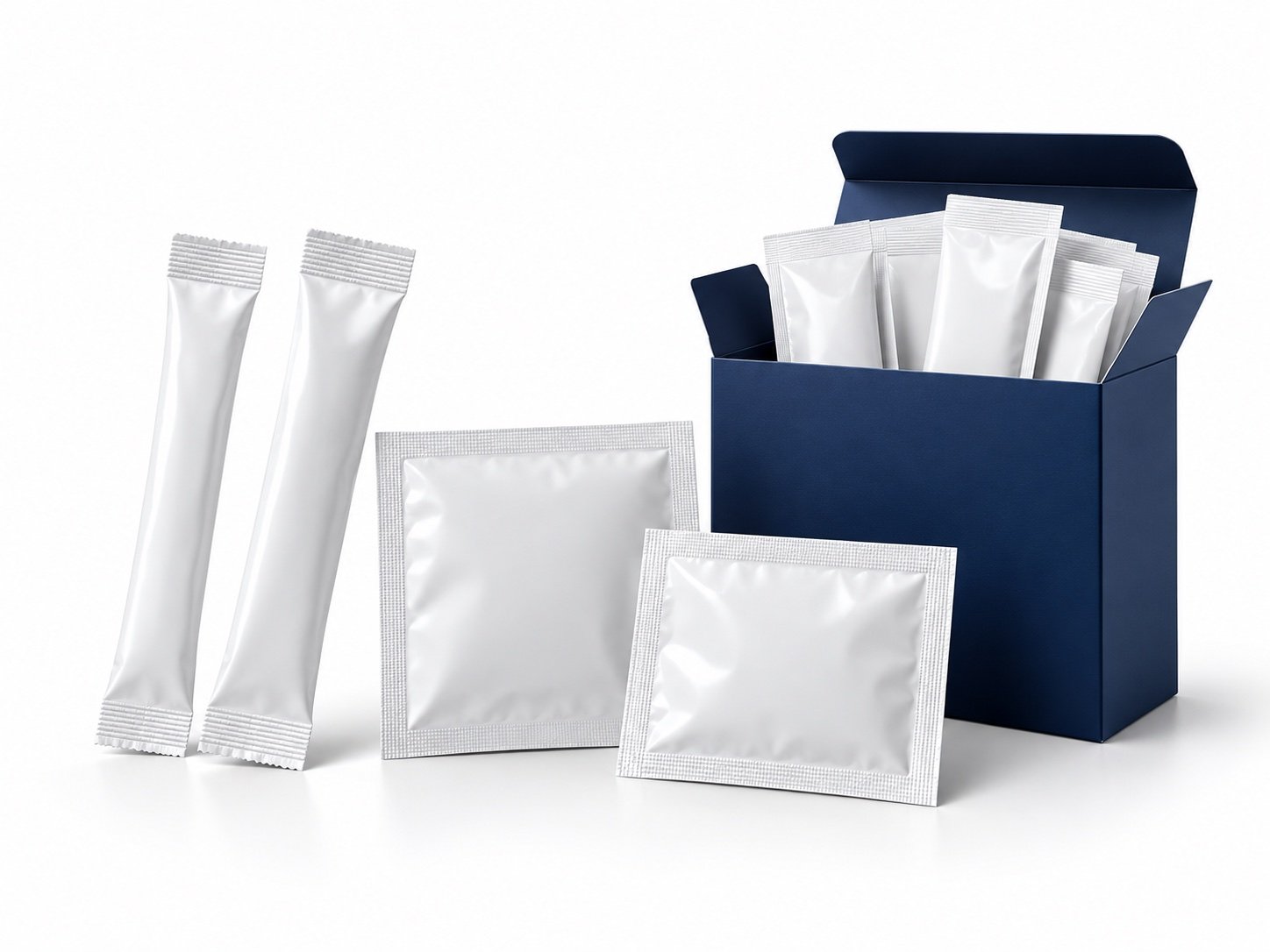
Packaging equipment for active nutrition products
A sports nutrition range may combine bulky protein servings, small electrolyte portions and viscous gels. Those products create different requirements for dosing, available pack volume and seal cleanliness. One pack style does not imply one filling system.
COTECH reviews the product, serving quantity and required output before discussing the machine configuration. Consider the complete production task, including flavor changes, allergen controls, film replacement and counting into multipacks.
What to review in sports nutrition packaging
- Serving volume. Use measured bulk density when sizing powder packs. A lower-density protein blend can need a wider or longer pack even when its serving weight stays the same.
- Ingredient behavior. Assess dust, bridging, settling and segregation with the complete recipe. Electrolyte salts and flavored blends can respond differently to humidity and feeding.
- Gel handling. Review viscosity at filling temperature, nozzle cut-off and product in the seal area. Confirm how the consumer will open and dispense the portion.
- Useful production output. Calculate accepted portions per shift, allowing for cleaning, recipe changes and downstream handling. Lane count alone is not a reliable capacity comparison.
- Cleaning and inspection. Agree contact-part access, allergen changeover procedures, weight checks and coding. Validate the planned approach with representative formulations.
- Powder stick pack machine. Narrow single-serving packs can suit electrolyte and pre-workout mixes when the serving volume fits the pack. Review auger selection and dust behavior during product trials.
- Sachet packing machines. A larger sachet face can accommodate bulkier protein portions and consumer instructions. Confirm dimensions using the actual powder density and required seals.
- Liquid stick pack machine. Energy gel portions require a suitable liquid dosing arrangement and a clean seal area. For grouped servings, discuss coordinated collection and secondary handling.
Film, factory testing and production planning
Select a laminate around moisture sensitivity, ingredient protection and how the portion is used. A drink powder, an oily formulation and an energy gel may have different barrier, compatibility and opening requirements. Evaluate any proposed mono-material film on its own merits.
Factory testing should include the production recipes and serving sizes that represent the working range. Record fill variation, seal quality, code legibility and accepted output under defined conditions, including the proposed product supply arrangement.
For installation preparation, confirm utilities, available floor space, product transfer and the interface to counting or cartoning. Send your sales-unit count and shift target so the machine and downstream process can be reviewed together.