Dosing & Product Handling
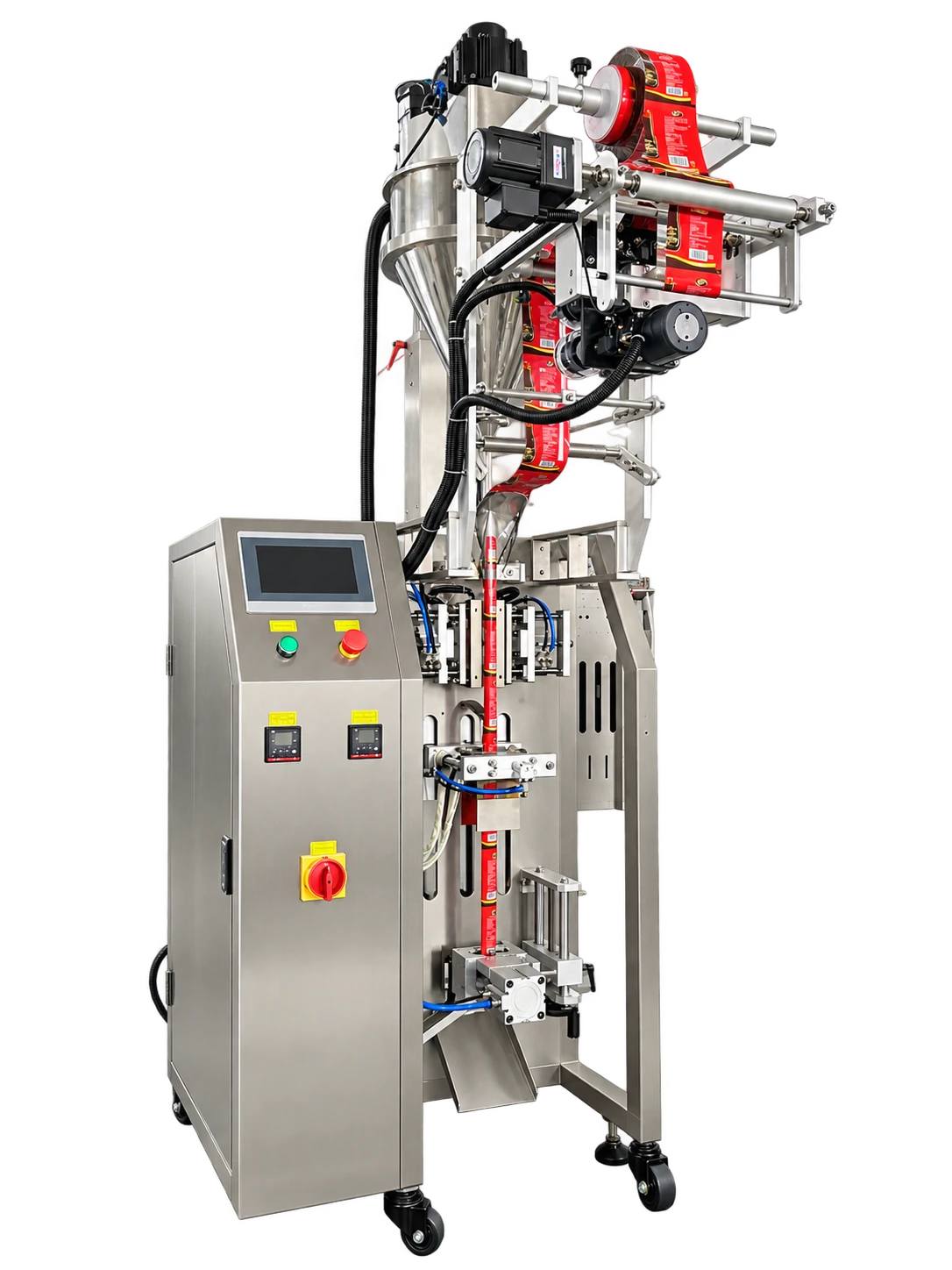
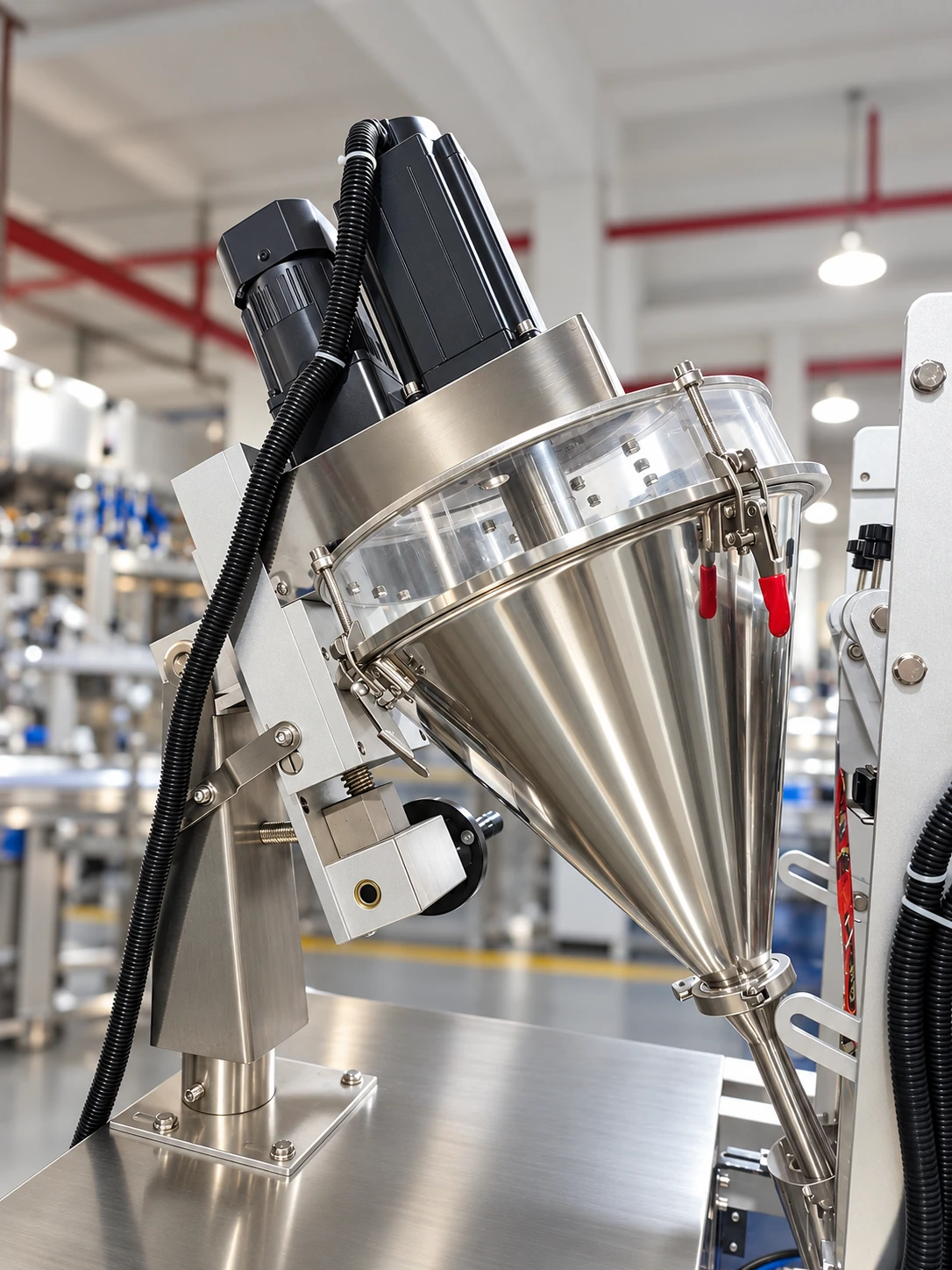
Ingredients can separate during transfer and hopper refills when particles differ in size or density. For suitable vitamin and mineral blends, COTECH combines vacuum conveying, servo-driven hopper agitation and a long servo-driven auger to control feeding and meter the powder. Settings are checked with the actual mix.
Take samples by lane at startup, at stable operation and around a refill. Check net weight and ask your quality team to assay selected ingredients from the retained samples. Two packs with the same total weight can contain different ingredient proportions, so the ingredient check answers a separate question from the machine's fill-weight check.
Experimental study of particle segregation during powder transfer ↗
Match the stick width and filling clearance to the powder's bulk density and give the dose time to settle. Low-density collagen or protein powders can take up more space than their weight suggests. COTECH can add a fines collector at the top seal to capture airborne powder before the jaws close.
Run the actual serving weight in the intended pack at production speed. Inspect the top seal for trapped fines, compare net weights and check filled packs for leaks. Confirm that the dust collection setting controls the airborne fines while keeping the intended dose in the pack. A wider pack may help when the required volume leaves too little sealing clearance.
Experimental study of powder contamination in heat seals ↗
Test the finished electrolyte blend for flow, fill weight and moisture sensitivity. A blend containing fine salts, flavors and other ingredients may feed differently as the hopper level changes or after exposure to humid air. Give COTECH a representative batch, target dose and intended pack so we can check feeding and metering together.
During the trial, compare the first packs, stable running and packs made after a refill. Record the packaging conditions and check the top seal for powder or channels. If formula components can segregate, agree separate composition checks with your quality team. When changing flavors, verify any recipe with materially different density or flow before transferring the previous settings.
Volumetric dosing measures a set volume and can suit free-flowing granules with stable bulk density. A weighing system measures mass and is worth evaluating when density varies or when the project requires direct weight control. Particle size, fragility and segregation can also influence the choice.
Send samples of the actual blend and share the target dose, tolerance and the range of particle sizes. Trial the selected system at the intended rate and evaluate weight by lane if applicable. Check that the granules feed evenly and that fines or larger pieces do not collect at the seal. If ingredients can separate, also verify the composition of sampled servings.
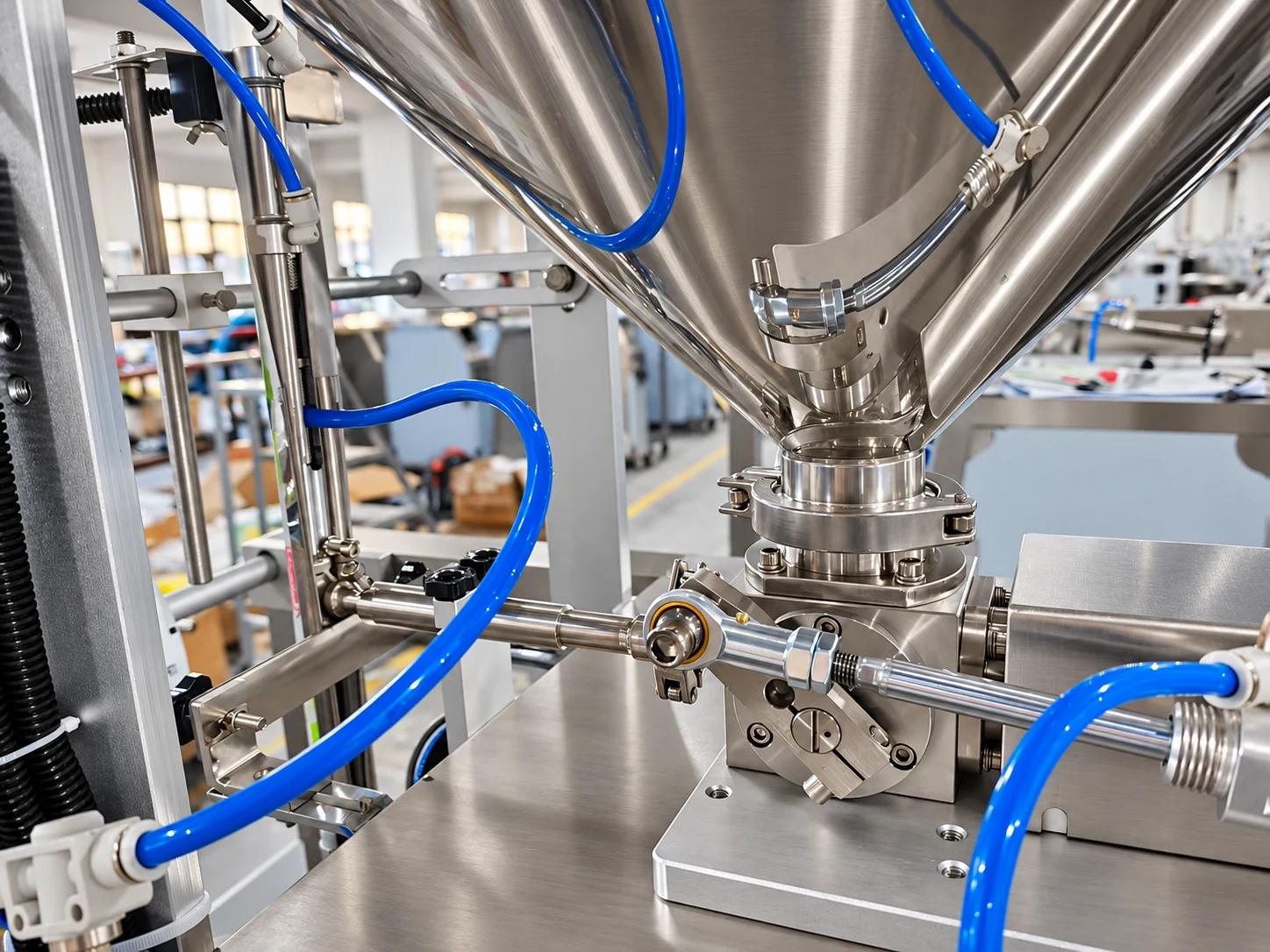
COTECH selects a pump based on how the liquid flows at its actual filling temperature and configures anti-drip shutoff for the required cycle. Thin liquids may drip after the dose, while viscous products can leave a strand of liquid behind. Either can get into the seal even when the fill quantity is correct.
Trial the actual liquid at the intended temperature and speed. Check the fill quantity, what happens at the nozzle after dosing, and whether the seal area remains clean. Include the first packs after a stop and restart. Tell COTECH if the product foams or contains particles, since those properties can affect the filling and shutoff configuration.
FILAMATIC technical guide to filling nozzles and shutoff ↗
COTECH uses ±1% of target net weight per pack as a preliminary reference for discussing fill accuracy. If a project adopts that tolerance at a 10 g target, the example limits are 9.90 to 10.10 g. Confirm the applicable tolerance with the selected machine, product, dose, film and running speed.
Agree a sampling plan before the trial and measure net contents after allowing for the packaging tare. Review individual results and the spread by lane and time, including startup and refills. For liquid specifications expressed in milliliters, agree a volume measurement method or use an appropriate density at the stated temperature when converting from mass.
COTECH guide to testing fill accuracy by lane ↗
Film, Sealing & Shelf Life
Yes. Start with the intended pack, serving size, storage and distribution conditions. Ask your film supplier which constructions provide the required moisture or oxygen barrier, opening behavior and suitability for product contact. COTECH can use the pack and product requirements to discuss a configuration while the film choice is open.
Use the intended film for final equipment trials because a material that provides the right barrier can still behave differently during forming, tracking and heat sealing. Check filled packs at the target speed and inspect both seams, opening and print alignment. If you are comparing films, keep the formulation and pack size consistent so the results are easier to compare.
COTECH packaging film selection and testing guide ↗
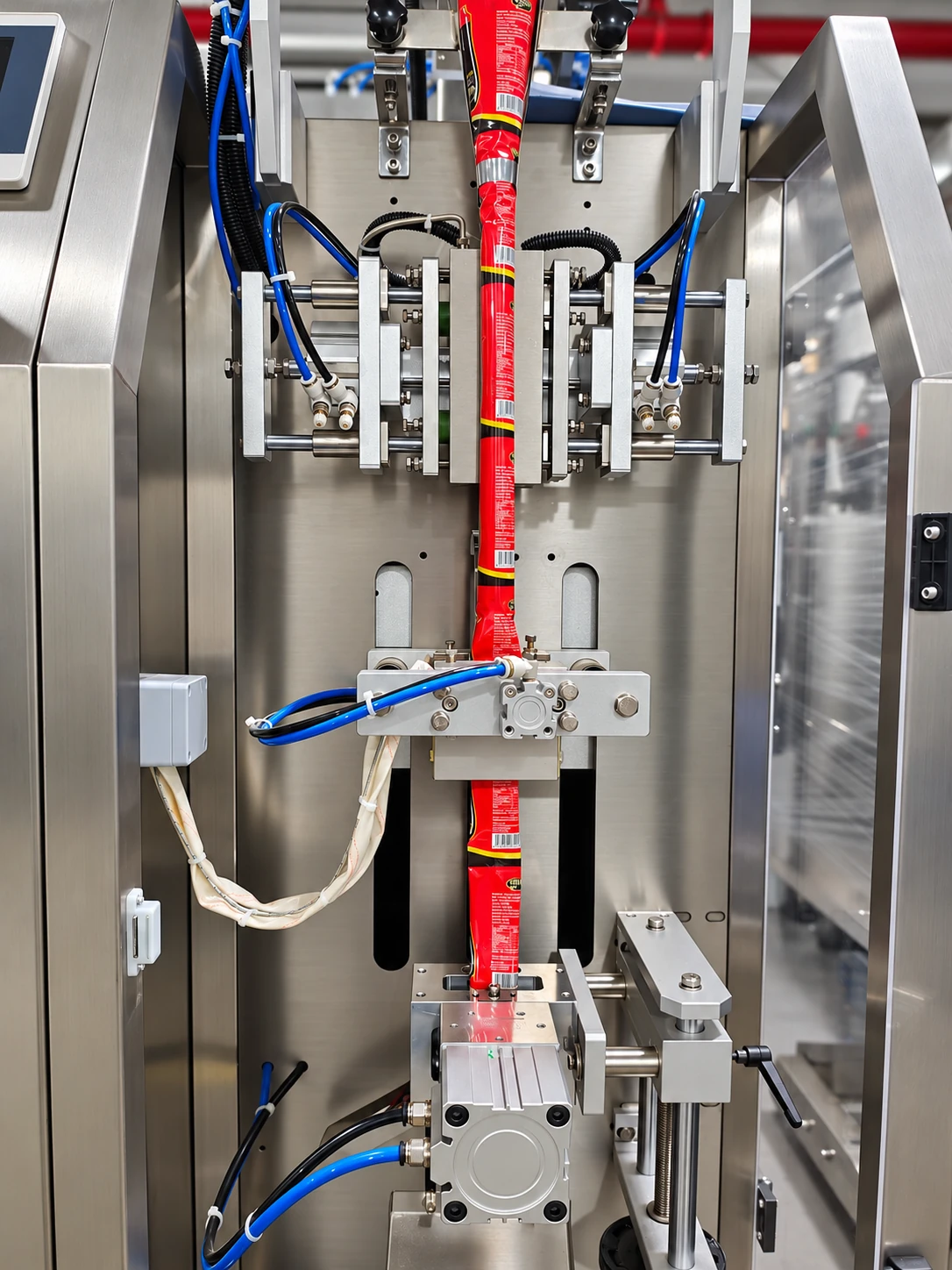
For moisture-sensitive probiotic powders, review exposure before filling, the film's water-vapor barrier and the integrity of the finished seals. COTECH can configure separate longitudinal and cross heat seals and use two heat-sealing stages. The actual film and the production rate determine the conditions to verify.
A machine trial checks how the pack forms, fills and seals, including whether the filled pack leaks under the agreed test method. Probiotic shelf life calls for separate product stability work. Your formulation and quality team should assess viability through the intended storage period and conditions using the final formulation and packaging.
Research on probiotic powder stability during storage ↗
Check both the longitudinal and cross seals on filled packs made with the intended film at the target speed. Inspect for wrinkles and trapped product, use a suitable leak test, and agree whether seal strength and ease of opening also need separate measurements. Each check answers a different question about how the pack will perform.
Set a sample plan covering steady running, changes in operating conditions and the relevant lanes. Record the film batch, product, speed and sealing settings alongside the results. Agree the test method and acceptance limits before the run so a change in film or settings can be compared against the same criteria.
COTECH guide to seal integrity testing ↗
A film switch is a machine and pack trial. A new structure can change friction, tracking, seal temperature and dwell time, even when the pack dimensions remain the same. Confirm the required barrier and ask your supplier for the new film specification, roll and sealing guidance.
Trial with the actual supplement and intended running speed. Check roll tracking, print registration, seal integrity and opening, then compare accepted output and rejects against the previous film. Recyclability depends on the complete pack construction and local collection and processing systems. Check that separately from whether the film runs well on the machine.
ROVEMA packaging material application tests ↗
Consider nitrogen flushing when your product and quality teams identify oxygen exposure as a stability concern and can define a residual oxygen target. Review the filling conditions, film barrier and seal integrity alongside the gas system. For a product sensitive to moisture, also define the moisture-control measures separately.
COTECH can discuss an optional gas-flushing configuration around the pack geometry and running speed. During a trial, agree how and when to measure residual oxygen in filled packs and check that seals stay intact. Product stability under the intended storage conditions still needs to be verified with the final formulation and pack.
Output, Changeovers & Multipacks
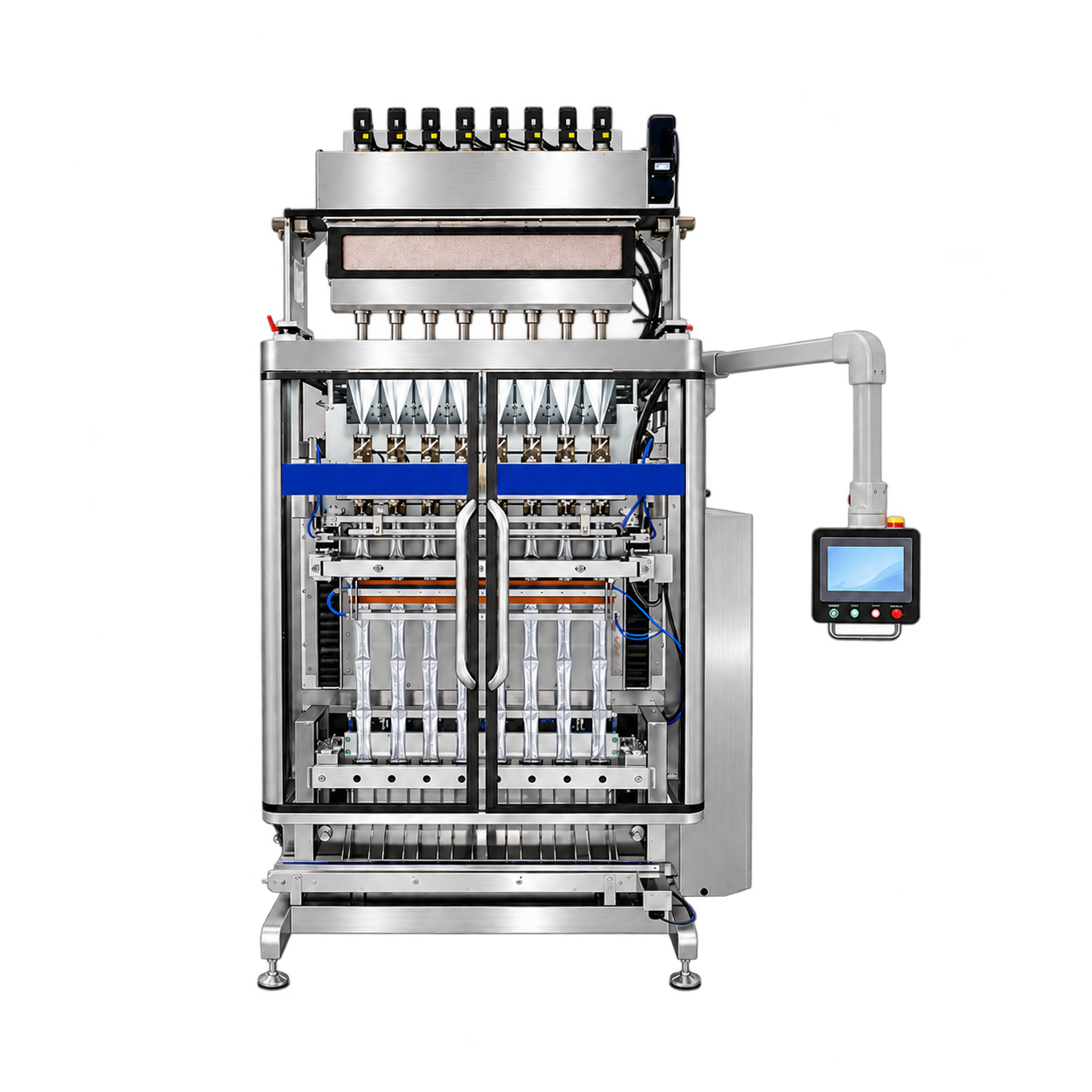
COTECH uses 25–30 packs per minute per lane as a preliminary planning reference. For six active lanes, that gives 150–180 sticks per minute before rejects or stoppages. The achieved rate depends on the product, target dose, pack size, film and downstream handling.
Ask for accepted sticks per minute over an agreed run with your product and pack. For order planning, estimate accepted packs per shift after setting aside time for startup, film changes, cleaning and changeovers. Where the line includes cartoning or bagging, measure finished cartons or bags separately at the end of the line.
COTECH guide to measuring real line capacity ↗
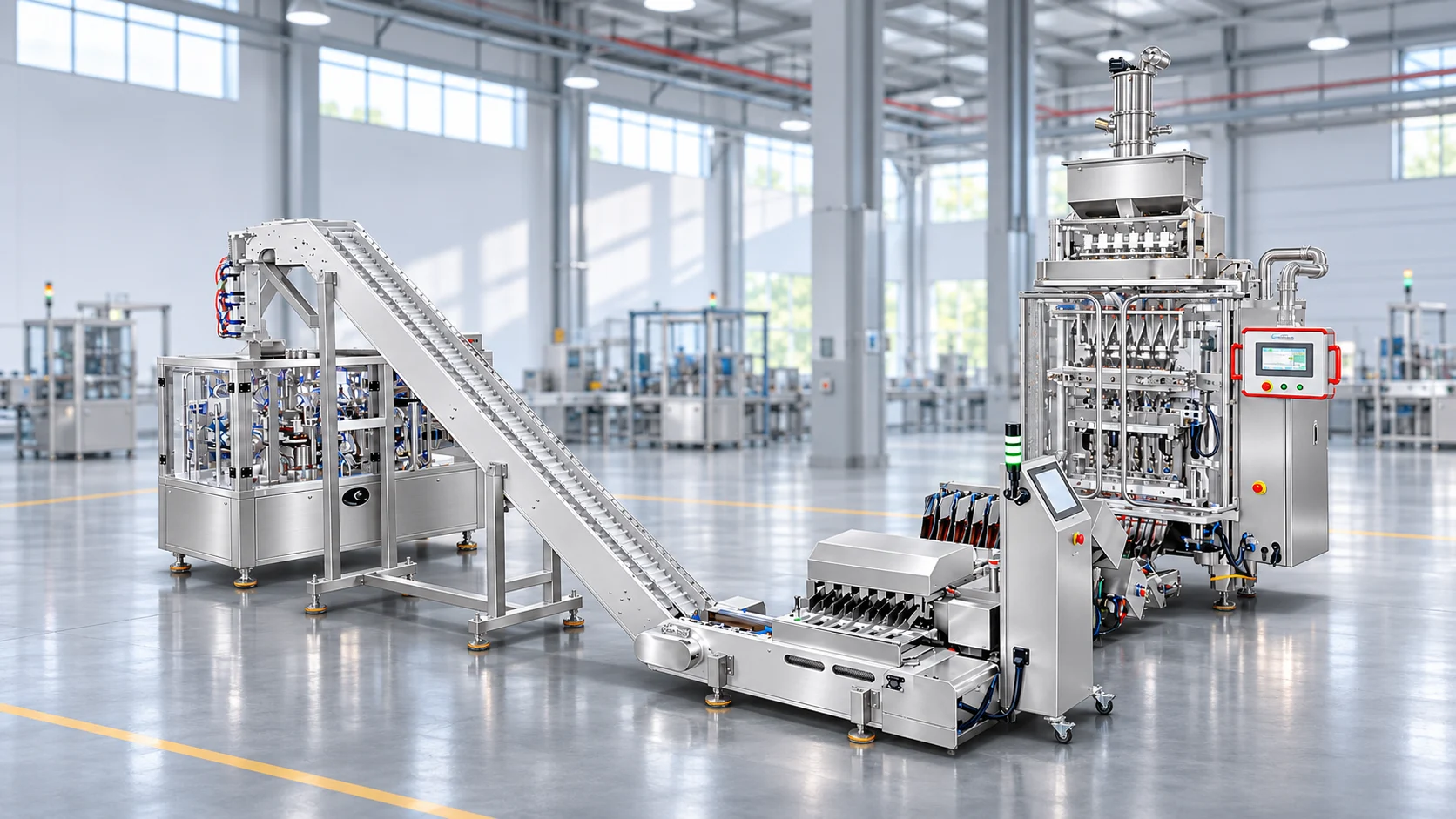
An integrated line transfers sealed sticks, counts accepted packs as they reach the grouping point, and sends each complete group to the cartoner or bagging machine. Counting the sticks that actually reach the group matters when an upstream reject removes a stick or a lane stops feeding.
For sizing, divide accepted sticks per minute by the required sticks per multipack. For example, 120 good sticks per minute can supply at most 12 groups of ten per minute in steady running before downstream losses or pauses. During acceptance, check group count, pack orientation, how the line handles interrupted flow, and finished cartons or bags per minute.
COTECH guide to stand-alone machines and integrated lines ↗
Choose the format around the way you sell and dispense the sticks. A folding carton can present an arranged stack with a planned opening. A flexible outer pouch can suit a resealable multipack. Both routes need the correct stick count and an infeed that handles the whole group.
For cartoning, provide the carton drawing or sample, the number of sticks and the preferred stacking and loading direction. For bagging, send the actual outer pouch and its opening dimensions so the group can be checked against the bag and final seal area. Specify the required finished cartons or bags per minute for either route.
One machine can cover several recipes when the doser, forming tools, film and cleaning procedures suit each application. Compare the lightest and densest powders, the smallest and largest serving sizes, and any change in pack geometry. Some combinations can share tooling, while others need format or dosing parts.
Measure a complete changeover from the final accepted pack of one run to the first accepted pack of the next. Include cleaning, tooling, recipe settings and verification. For products with allergens, agree how shared product-contact parts are cleaned and how your quality team verifies readiness before the next run.
COTECH cleaning and changeover guide ↗
COTECH can assess an existing stick pack machine for a downstream upgrade. Start with the current machine model, layout, discharge height and direction, stick dimensions and orientation, and measured accepted output. Identify where inspection and rejection occur so the downstream system can count the sticks it actually receives.
Share operating video and the intended carton or outer bag, including the count per retail unit. Review transfer, buffering, access for operators and how the two systems should respond to downstream stops. The feasible scope and performance depend on the existing machine interface, available space and condition of the sticks at discharge.
COTECH system upgrade and retrofit services ↗
COTECH can review thermal transfer, inkjet or laser coding for lot numbers, expiry dates and other variable information. The choice depends on the film construction, print area, artwork location and running speed. Define which information belongs on individual sticks and which belongs on the carton or outer bag.
Use the intended printed film to check print position, contrast and readability at speed. During qualification, include a roll change and restart to verify that codes remain legible and in the right position. If code verification or rejection is required, define the inspection method and how the line handles a missing or incorrect code in the project specification.
Trials, Purchasing & Support
Start with the product form, serving size in grams or milliliters, preferred pack type or sample, and required accepted output. Tell COTECH what you plan to make in one shift, how often recipes or formats change, and whether you need loose sticks, retail cartons or outer bags.
Add the film specification or bag drawing if available, site dimensions and destination utilities. If you have a recurring issue, such as powder caught in the seal or liquid dripping at restart, send a photo or sample. These details help the team propose a machine configuration and identify what must be checked in a product trial or factory acceptance test.
Agree the trial scope and material quantity with COTECH before sending samples. The quantity depends on dose, lane count, trial length, and how many recipes, pack sizes or films need checking. Allow material for machine setup, stable running, any refill or restart checks, and retained samples.
Send a representative production batch and the intended film roll or actual premade pouches. Label samples with the formulation or batch identifier and share handling conditions, such as filling temperature or moisture sensitivity. For a multipack trial, include the retail carton or outer bag and count per pack. If trial materials differ from production materials, record which conclusions need confirming with the final materials.
COTECH product and film review ↗
Price and delivery estimates depend on the agreed configuration. Lane count, the dosing system, special pack tooling, inspection, coding and secondary packaging all affect the scope. Timing also depends on when the pack specification, trial materials and acceptance requirements can be confirmed.
Compare quotes against the same product, pack and accepted output. Ask which format parts, downstream equipment, factory trials, documents, installation, training and spares are included. Confirm the delivery milestones and warranty terms in the quotation for your configuration so your purchasing and production teams can plan against the same scope.
COTECH guide to comparing machine quotes ↗
COTECH tests each machine before shipment against the agreed customer requirements and produces trial and inspection records. Customers can visit the COTECH factory for a Factory Acceptance Test (FAT). Agree the specific configuration, product and film, run duration, sample plan and pass criteria before the test.
For a nutraceutical line, the agreed checks can cover net fill by lane, seal integrity, pack dimensions, coding and accepted output. If the project includes secondary packing, specify the stick count per carton or bag and the finished-unit rate. An agreed Site Acceptance Test (SAT) then checks the installation with your own facilities, utilities and line interfaces.
COTECH factory acceptance test checklist ↗
Map your equipment specification to the packaging controls and records your quality team needs for its own process. FDA's dietary supplement CGMP guidance addresses process controls, packaging and label specifications, equipment and quality operations. Your quality team determines which requirements apply to your site and product.
Discuss product-contact materials, cleanability, label and code checks, traceability or verification records, and testing requirements before purchase. Ask COTECH to confirm what is included in the machine and its documentation and which checks can be included in the FAT. Plan the site's procedures, training and process qualification with your quality team.
FDA dietary supplement CGMP guidance ↗
Review the agreed layout, delivery access, power, compressed air and other services for the actual configuration. Leave space for loading film, replenishing product, cleaning, maintenance and moving finished packs. Confirm the upstream and downstream handoff points before equipment arrives.
COTECH can arrange on-site installation and commissioning support and train your operators on the supplied equipment. Discuss startup, settings, cleaning, changeovers and routine maintenance in the project scope. Agree whether your team also needs a site acceptance run, and confirm the product, film and operators required to carry it out.
COTECH site preparation checklist ↗
Send COTECH the machine model or project reference, the fault indication, when it began, and photos or video you can safely collect. Include any recent change to the product, film or settings. The service team can use that information to guide remote checks and discuss whether the issue calls for an engineer visit.
For a spare part, share the component identifier or a photograph together with the machine details so the team can help confirm compatibility. During purchase, review the parts your team should keep on site, the documents supplied, and the agreed service and warranty scope for your installation.
COTECH spare parts support ↗