
Introduction: what does a stick pack machine need before installation?
A stick pack machine needs a verified delivery route, suitable layout, equipment-specific utilities, representative product and film, trained personnel and an agreed commissioning plan. Obtain the final installation drawing and utility schedule for the purchased configuration. Do not size the site from a general brochure, an online photograph or another machine's requirements.
For an overseas buyer, delivery and production readiness are separate milestones. A machine can arrive as ordered while the room, materials or downstream equipment are still unavailable. Installation preparation connects those responsibilities before a technician, production team or shipment reaches the site.
This guide provides a practical checklist for food, supplement and contract-packing projects evaluating COTECH stick pack equipment. All dimensions, loads, power and air requirements must be confirmed for the actual equipment. The checklist supports planning; connection, lifting and commissioning work must follow the supplied instructions and qualified site procedures.
1. Freeze the equipment and production scope
Start with what is being installed. A primary packer, a packer with product feeding, and an integrated line can have different footprints, utilities and acceptance interfaces. List each supplied machine, accessory and customer-provided item, including printers, inspection devices, conveyors and secondary packaging equipment.
Define the first production application: product, portion, film, stick dimensions, active-lane arrangement and accepted-output objective. Identify any later formats separately. This prevents a demonstration of one format from being treated as confirmation of every planned product.
Use controlled drawings and revisions
Request the current layout, service connections and shipment configuration. Record the drawing revision used by the facilities team and confirm how changes are approved. A revised conveyor direction or feeder arrangement can affect a room that was already prepared to an earlier drawing.
For downstream counting or cartoning, use the machine versus integrated line guide to define the boundary. Buying the primary packer does not automatically include every interface needed to deliver a finished sales unit.
2. Check the complete delivery and positioning route
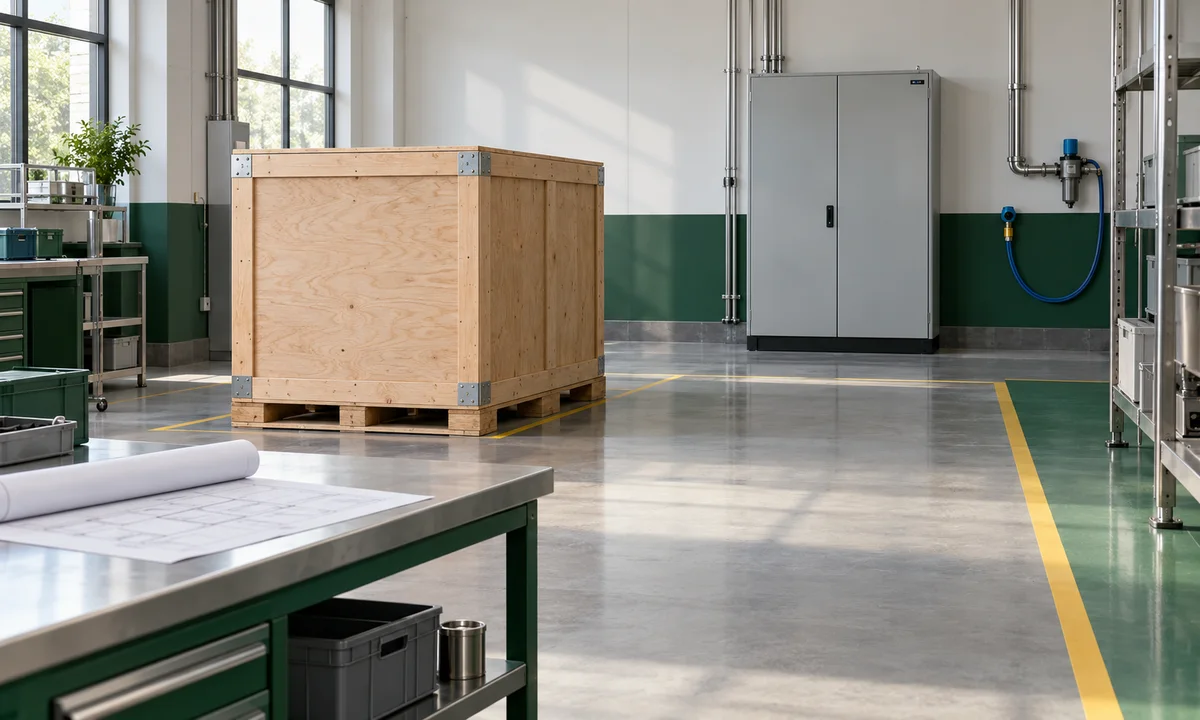
Compare the shipment dimensions and handling instructions with the route from unloading to the final room. Review doors, corridors, corners, overhead restrictions, ramps and any lift or platform involved. The shipping crate and transport arrangement can be larger than the installed machine.
Have the responsible site specialists assess floor loading, lifting arrangements and handling equipment against the actual weights and instructions. Do not choose lifting points or remove supports by interpreting a marketing photograph. Agree who provides the qualified handling team and the required equipment.
Plan access before the delivery date
Confirm unloading availability, temporary storage and protection while waiting for positioning. If equipment must pass through a controlled production area, coordinate the route and timing with the facility. Record restrictions early enough to change the plan without improvisation on arrival.
Provide the supplier with dimensioned route information and clear photographs where useful. Ask whether the shipping arrangement requires planned assembly at the destination. Any dismantling for access should be a documented supplier-approved activity, not a last-minute attempt to fit a doorway.
3. Allow operating, maintenance and cleaning space
The machine footprint is only part of the layout. Operators need access to the control panel, film-loading position, product supply and finished-pack discharge. Maintenance and cleaning can require guards to open, components to be removed and service personnel to work around the equipment.
Mark those activities on the layout with the supplier's required clearances. Include the location of film rolls, product containers, rejected packs and component storage. An aisle that is clear on a drawing can become obstructed when routine production materials arrive.
Review the complete product flow
Trace incoming material, replenishment, accepted output and waste as separate movements. Check the interfaces with upstream feeding and downstream handling. Avoid assuming that operators can safely move product or rolls through the same narrow space used for maintenance.
Discuss room conditions and relevant product sensitivity with the product owner. A hygroscopic powder or temperature-sensitive formulation may need conditions beyond a general machine specification. Confirm how the site will establish and monitor those conditions rather than copying a competitor's facility description.

4. Confirm electrical requirements with qualified personnel
Obtain the equipment-specific supply specification, connection information and electrical drawings. Confirm voltage, frequency, phase arrangement, rated demand and the relevant site connection requirements with the manufacturer and qualified electrical personnel. Include supplied auxiliaries that may have separate feeds.
The site team should determine the appropriate supply, protection and earthing arrangements using the applicable local requirements and the equipment documentation. Do not infer compatibility from the destination country alone. Facilities within one market can have different available services.
Consider the operating load
Heaters, drives, product feeders and downstream devices may contribute differently to demand. Discuss the complete configuration and the intended operating sequence rather than sizing the service from one component's label. Confirm how the installation team will verify the supply before machine activation.
Record who installs the connection, who checks it and what evidence is available to the commissioning team. The purchasing enquiry should request the necessary information; it should not leave electrical work to an unqualified operator when the crate arrives.
5. Specify compressed air and other services at the machine
Where the configuration uses compressed air, confirm the required pressure, flow and quality at the machine connection. A compressor's nominal output is not the same as the service available at the equipment during production. Other users, distribution losses and treatment equipment can affect the delivered condition.
Ask the supplier to identify the consumption basis and any peak-demand considerations. Have qualified site personnel evaluate the distribution line, isolation and treatment arrangements. Do not apply another manufacturer's pressure or flow figure to the machine being purchased.
Clarify product-contact and process uses
Identify whether air or another gas contacts the product or the inside of the package, or serves only an equipment function. The product owner should define relevant quality requirements for the intended use. A general statement that the site has compressed air is not a complete specification.
List any additional services explicitly: product supply, dust extraction, gas flushing or connections associated with a specified cleaning system. Confirm which are included in the machine supply and which the buyer must provide. Do not assume every project needs every listed service.
6. Prepare representative product and production-intent film
Commissioning cannot demonstrate the intended application if the product or film is unavailable. Agree which formulations, portions and roll specifications will be used at the site, how much material is needed and who supplies it. Include enough material for setup, adjustment, sampling and the agreed observation period.
Keep material identification consistent with the factory testing record. If the destination uses a different film structure, print repeat or formulation, identify the change before installation. Factory results under one combination do not automatically establish performance under another.
Prepare the surrounding consumables
Check coding consumables, labels, sample containers and any packaging needed by downstream equipment. Confirm the availability and suitability of weighing or inspection equipment used in the acceptance plan. Missing low-cost consumables can prevent useful work on a fully installed line.
Store product and film under their specified conditions. The film selection guide explains why structure, unwind direction and registration information should be agreed with the converter and machine supplier before commercial roll production.
7. Connect factory testing with shipment inspection
Before shipment, reconcile the accepted configuration, outstanding observations and supplied items. The handover should identify the equipment, relevant formats, component sets, documentation, agreed spares and accessories. Compare the packing list with the purchase scope rather than assuming every item visible during a factory visit is included.
Retain the agreed factory acceptance testing record, including the product and film used and the conditions observed. Keep unresolved points visible. Installation should begin with a shared understanding of what was demonstrated and what remains to be established at the destination.
Allocate document responsibilities
Agree who prepares shipping documents, checks destination requirements and coordinates with the buyer's logistics and customs partners. Requirements depend on the shipment and destination; a generic blog checklist should not be treated as a complete import-document list.
Confirm how manuals, drawings and backup information are delivered and controlled. Identify the language and training material needed by the receiving team. Documents that exist but cannot be accessed by the people installing the line provide little practical support.

8. Plan commissioning in stages
Distinguish equipment positioning and connection from activation, optimization and production acceptance. Each stage needs the relevant people, materials and permissions. An installed machine is not necessarily ready to produce released customer orders immediately.
As a primary-source example, Viking Masek's startup framework distinguishes basic activation from optimization and team development. Its listed service scope applies to that supplier. The useful buying question is which comparable tasks and responsibilities are included in your own agreement.
Define the first site trial
Identify the format, formulation, film, sampling checks and accepted-output conditions. Include the relevant coding, inspection and downstream interfaces. Record the conditions and any approved adjustments rather than reporting only that the machine ran.
Set a process for documenting observations, assigning actions and deciding when a trial can proceed. Avoid treating a stopped upstream feeder or an unavailable carton as evidence about the primary packer's standalone capability. Evaluate each interface within its agreed scope.
9. Prepare the people and support arrangements
Nominate operators, maintenance personnel, quality representatives and a project contact. Arrange their availability for the relevant activities. Training loses value when the people who will run the next shift cannot attend or when no representative product is ready.
Agree the training scope: normal startup and shutdown, approved recipes, film loading, routine checks, cleaning, changeover and fault escalation. Maintenance access and electrical work require the appropriate authorization and competence; basic operator orientation does not confer those roles.
Make overseas support practical
Confirm communication channels, time-zone coordination, document access and the scope of remote or on-site support. Ask what information should accompany a service enquiry and which activities require a physical visit. Do not assume a particular response time or travel arrangement unless it is explicitly agreed.
Keep the machine identification, drawings, parts information and acceptance records accessible. A shared issue log helps the destination team continue the handover without relying on one person's memory or a scattered series of messages.
10. Use a readiness gate before booking the final startup
Review readiness jointly rather than collecting separate informal assurances. Each item needs an owner, evidence and an unresolved-action status. The final decision should reflect the tasks planned for the visit and the consequences of missing information.
| Area | Evidence to review | Typical participants |
|---|---|---|
| Delivery and layout | Approved route, weights, clearances and final drawing | Facilities, handling team and supplier |
| Utilities | Equipment schedule and qualified connection checks | Facilities and authorized installers |
| Product and film | Identified materials, approved rolls and adequate quantities | Production, quality and converter |
| Acceptance | Defined trial, sampling and action-closure process | Buyer project team and supplier |
A readiness review does not need an elaborate system to be useful. Its purpose is to expose dependencies before the startup window. Keep changes controlled after sign-off, especially when a new material or layout revision changes an assumption used to prepare the site.
11. Handover the accepted operating condition
At the end of commissioning, retain a concise record of the configuration actually used. Identify the product and film, relevant format parts, approved recipe and the acceptance observations. Keep outstanding actions separate from accepted items so the production team can see what remains to be resolved.
Explain how routine work continues after the installation team leaves. Assign responsibility for material identification, startup checks, cleaning records and escalation. A well-organized handover reduces reliance on the person who happened to attend the first trial.
Prepare a useful early-production review
Agree which observations the customer will collect during the first planned campaigns. Accepted output, rejects, stops and the conditions surrounding them can help distinguish a training issue, a material change or an equipment question. Use the agreed definitions consistently; a headline output total alone does not explain production behavior.
If a symptom develops, preserve the original setup record and use a structured troubleshooting evidence pack. Describe the observed change rather than adjusting several settings before requesting support. Any resulting inspection or change should remain within the manufacturer's approved procedures.
Confirm the document and spare-part location before closing the project handover. The operator should know where to find the current instructions, and maintenance personnel should be able to identify the purchased components. This practical information turns installation completion into a repeatable production starting point rather than a one-day demonstration.
FAQ
What power supply does a stick pack machine require?
Use the specification for the purchased machine and auxiliaries. Confirm voltage, frequency, phase arrangement, demand and connection details with the manufacturer and qualified site personnel. There is no reliable universal answer based only on the phrase stick pack machine.
Is an existing factory compressor sufficient?
It may be, but capacity alone does not prove the required condition at the machine. Review pressure, flow, treatment and simultaneous demand against the equipment schedule. Have the responsible site team confirm the delivered service before commissioning.
How much floor space should I reserve?
Use the final layout plus the specified operating, loading, cleaning and maintenance clearances. Include feeding, discharge and downstream equipment. Check the delivery route separately because shipping dimensions and handling arrangements can differ from the installed footprint.
Can installation proceed with substitute product or film?
A substitute may support a clearly defined preliminary task, but it does not establish the intended application. Agree the purpose and limits with the supplier. Representative product and production-intent film are needed for meaningful application acceptance under the agreed conditions.
Does passing the factory test replace site acceptance?
No. The factory record describes its tested conditions. The destination introduces its own utilities, materials, people and equipment interfaces. Agree what will be verified at the site, how differences are handled and who reviews the resulting evidence.
How long should commissioning take?
Duration depends on configuration, readiness, integration, formats and the agreed trial and training scope. Request a project-specific plan with dependencies rather than a generic day count. Missing materials or incomplete utilities can extend the process without indicating a machine defect.
Conclusion: prepare the production system before the shipment arrives
A successful installation connects the machine with its room, utilities, materials, operators and acceptance plan. Confirm the final configuration, assign responsibilities and close readiness gaps before the startup window. This gives an overseas buyer a practical path from shipment inspection to a documented first accepted production run.
Send a site brief with your stick pack machine enquiry
Share your product, dose, pack drawing, accepted-output target, room layout and available utilities. Include the destination, access constraints and downstream equipment. COTECH can discuss a suitable equipment configuration and the information needed for installation preparation.
Get a Quote