Introduction: how do you troubleshoot a stick pack machine?
Troubleshoot a stick pack machine by defining the defect, locating its pattern across lanes and time, and comparing the current product, film and setup with the last accepted run. Inspect the relevant conditions before changing settings. Use the machine manufacturer's procedures, change one approved variable at a time, and verify finished-pack quality before releasing production.
A leaking seal does not automatically mean insufficient heat. Film drift does not automatically mean a failed sensor. Cutting faults can begin upstream, where the web position or print registration changes. Treating every symptom as a separate broken component can hide the relationship between them.
This guide helps overseas buyers, production teams and packaging engineers organize a technical investigation. It also provides questions for evaluating a new stick pack machine. It is a diagnostic framework, not a substitute for the operating manual or authorization to adjust an unfamiliar machine.
1. Establish a safe, documented starting point
Separate observation from intervention. Operators can record alarms, pack appearance and the circumstances of a stop using the approved work instructions. Accessing tooling, clearing obstructions or inspecting moving components requires the relevant shutdown and energy-isolation procedure. Only authorized personnel should perform maintenance or electrical work.
Stop and escalate a damaged guard, repeated safety-circuit alarm, unusual mechanical contact or electrical fault. Do not bypass an interlock to obtain a better video. A support request should explain what happened without creating another hazard during the investigation.
Preserve the evidence before changing the recipe
Record the machine identification, recipe revision, product batch, film lot, active lanes and operating condition. Retain a reasonable sample of defective and acceptable packs under your site's handling rules. Note the last known acceptable production period. These details provide a baseline that an isolated photograph cannot supply.
2. Map the defect by lane, location and timing
Ask where the problem appears and when it begins. A defect confined to one lane suggests a different investigation from a sudden change across the whole web. Neither pattern proves a cause, but both help prioritize checks. Distinguish startup waste from faults that continue during stable operation.
| Observed pattern | Questions to investigate | Evidence to retain |
|---|---|---|
| One affected lane | Local product discharge, forming condition or tooling difference? | Lane number and adjacent-lane samples |
| All lanes change together | Shared film, utility, recipe or product-supply change? | Time record and whole-web photographs |
| Fault after a roll change | Roll specification, threading, splice or registration change? | Old and new roll identification |
| Fault after a product change | Different flow, dust, viscosity or cleaning/reassembly condition? | Product details and changeover record |
Mark the defect's physical location: longitudinal seam, end seal, tear feature, cut edge or pack body. Keep lane identification consistent from the machine to the sample bench. If samples are mixed together, a multi-lane pattern can disappear before the technical team sees it.
Also record whether the symptom is continuous, intermittent or connected to a restart. A short timeline linking replenishment, roll splicing, cleaning and recipe changes is often more informative than a long list of unconnected adjustments.
3. Investigate leaking or inconsistent seals
First describe the failure rather than calling every defect a weak seal. Does the seal separate across its width, contain a visible wrinkle, show product in the seal, or leak at a small localized channel? Does it look scorched or distorted? Different observations require different checks and acceptance methods.
Review the actual film structure and sealant side, the approved operating window, product contamination and tooling condition. Temperature, contact time and pressure interact with the film. A controller setpoint alone does not describe the entire sealing condition, and more heat can worsen distortion rather than remove the original cause.
Separate empty-film and filled-pack evidence
An approved empty-film trial can help distinguish film transport and sealing behavior from product discharge. If empty packs perform acceptably but filled packs fail, investigate dust, splash, product strings, fill timing and usable pack space. This comparison narrows the question; it does not prove a particular component is defective.
Agree an appropriate seal-strength and integrity assessment with the packaging team. Visual appearance, peel strength and leakage answer different questions. Use the methods and limits established for your application, and hold suspect production according to your quality procedure. See the separate film selection guide for the specification information needed before a trial.

4. Investigate film drift and registration changes
Film tracking concerns the web's position through the machine. Print registration concerns the relationship between the artwork or registration mark and the machine cycle. A pack can have one problem without the other, so document lateral drift separately from a repeated print-to-cut offset.
Begin with the approved roll specification and threading diagram. Compare roll width, unwind direction, core condition, print repeat and the circumstances of a splice. Ask authorized personnel to check loading, web path and the relevant transport or guiding components using the manufacturer's instructions.
Viking Masek's film-tracking explanation illustrates how web tension and centering can affect VFFS film movement. Its adjustment procedure belongs to its illustrated equipment; it should not be copied as a COTECH setup sequence.
A sensor cannot correct every upstream condition
Record whether the symptom follows a particular roll or appears with several approved rolls. Preserve the converter's lot identification and an example of the registration mark. Do not assume that changing sensor sensitivity will correct uneven winding, an incorrect web path or an unsuitable print specification.
5. Check cutting faults in the context of web movement
An off-center cut, an incomplete separation and an inconsistent tear feature are different symptoms. Compare the printed repeat, seal location and cut location on several consecutive samples. Note whether the offset is constant or changes progressively through the run.
Before requesting cutting parts, establish whether the web is reaching the cutting area consistently. Registration drift, incorrect format setup or film movement can make a sound cutting assembly appear responsible for an upstream problem. Authorized maintenance personnel can then inspect the relevant cutting components and installation against the manual.
Include the finished-pack drawing
A photograph without dimensions may not show whether the disputed position is outside the agreed format. Supply the approved drawing, artwork direction, seal margins and opening feature. Keep cutting-part changes within the manufacturer's specification; improvised adjustments can damage components or create unsafe access.
When a new laminate behaves differently, involve the film supplier as well as the machine team. The same nominal pack size does not establish identical cutting or opening behavior across all structures.
6. Connect dosing symptoms with product behavior
If seals become contaminated when the fill changes, investigate the product path and discharge conditions alongside the dosing result. A dusty powder, a fragile granule and a liquid that strings from a nozzle create different observations. Specify the product actually used, including its condition at filling.
For powders, record relevant density, flow and moisture-related changes. For liquids, describe viscosity at the operating temperature, foaming and any particles. Explain how product reaches the hopper or filler and whether the symptom coincides with replenishment or a change in supply conditions.
Do not use an overall average to conceal one inconsistent lane. Follow the measurement plan and lane identification discussed in our stick pack filling accuracy guide. A dosing investigation and a seal investigation may share a cause, but the evidence should establish that connection.
7. Run a controlled investigation, not a sequence of guesses
Agree the question being tested before an authorized adjustment. State the baseline condition, the single variable under review, the observation period and the finished-pack acceptance checks. Keep changes within the approved operating range and preserve a record of the previous setting.
For example, a hypothetical trial might compare two approved film lots using the same product, format and recipe. Label samples by lot and lane, then compare the defined seal and registration checks. This is a trial design example, not a report of a COTECH production result.
Include relevant transitions
A stable short run does not demonstrate every production condition. Where applicable, include an agreed restart, product replenishment or roll-change observation. Record rejected packs and the point at which acceptable production resumes. Avoid claiming a permanent correction from a few selected samples.
When several variables have already changed, ask whether the team should return to a documented approved configuration through the manufacturer's procedure. The objective is a traceable comparison, not an undocumented reconstruction of what might have worked earlier.
8. Build a technical-support evidence pack
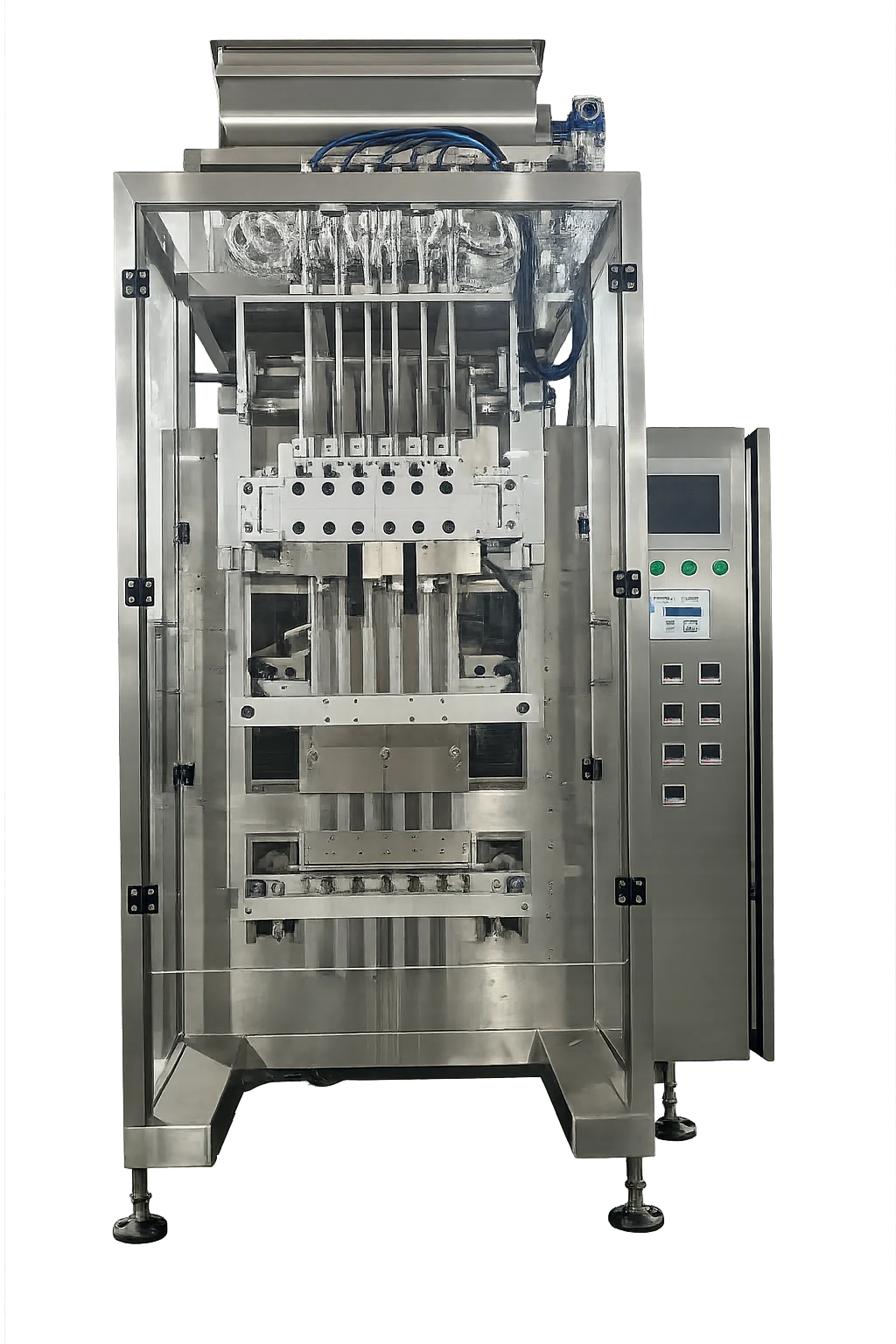
A useful enquiry links the symptom to the equipment and materials. Include the machine identification, applicable format, alarm wording, product information and film specification. Describe when the problem started, the affected lanes, recent changes and the steps already taken by authorized staff.
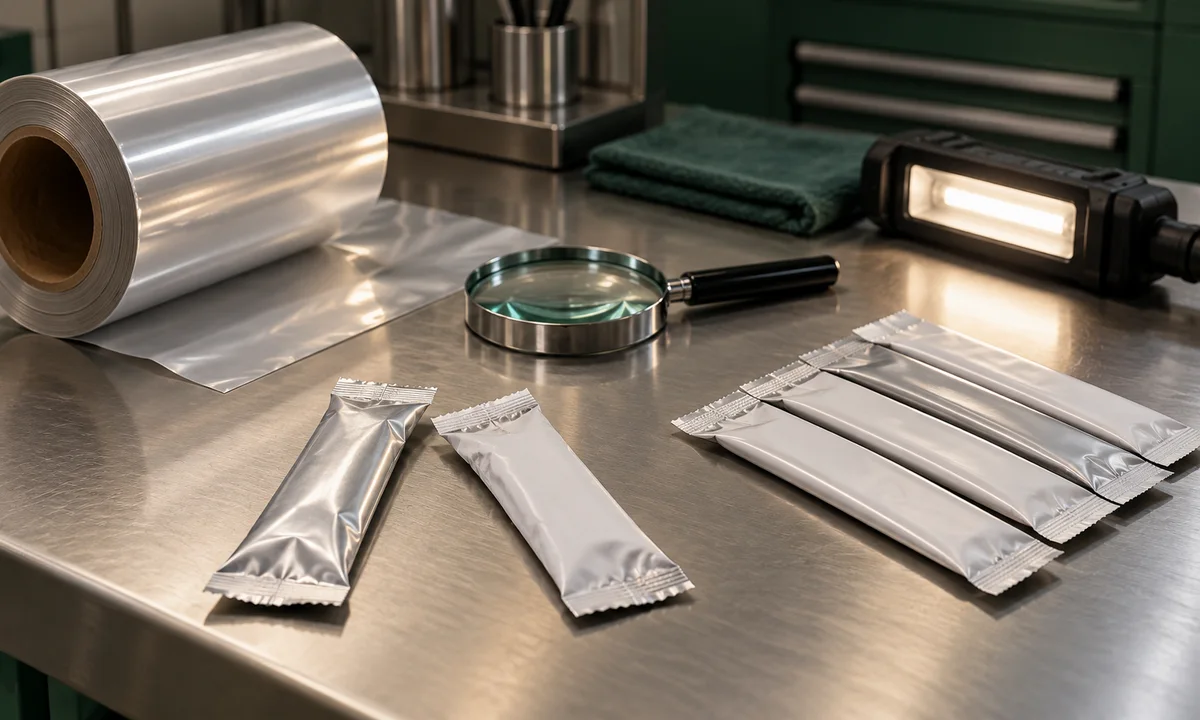
Photograph the whole defective pack, its relevant seal or cut detail, and a comparison sample. Add a ruler or a labeled drawing where dimensions matter. A safely recorded video can show timing or recurrence, but it should never require access inside guards or close proximity to moving equipment.
Make remote discussion efficient
Nominate one technical contact, use consistent sample labels and maintain a shared change log. Distinguish observations from assumptions: write “lane three shows a wrinkle after replenishment,” rather than “the heater is broken.” That wording leaves the investigation open to the evidence.
Ask whether the next step needs additional samples, a film review, an approved inspection or an on-site visit. Sending a complete evidence pack supports triage; it does not guarantee that every fault can be diagnosed remotely.
9. Use troubleshooting questions before purchasing
For a new machine, discuss how operators identify lanes, retrieve alarms, manage approved recipes and obtain support. Review the documentation, training, access for maintenance and the practical availability of wear parts. Confirm which functions belong to the quoted configuration rather than assuming every option is included.
At factory testing, ask for representative product and production-intent film. Define the acceptance checks, relevant starts and stops, and the evidence retained for shipment inspection. A useful handover explains normal setup and escalation, not merely how to start a successful demonstration.
Installation preparation matters too. Utilities, room conditions and material storage can differ from the factory trial. Use the installation requirements checklist to identify those differences before the equipment arrives.
10. Verify the correction and protect the next shift
Define what closes the investigation. Restoring motion is different from restoring accepted production. Compare the corrected condition with the original defect definition, inspect the relevant lanes and retain the results required by your quality procedure. Record both the accepted packs and the rejects generated during the investigation.
If the fault was intermittent, choose observations that address its original pattern. A problem that appeared after replenishment needs evidence related to replenishment, while a roll-change problem needs a relevant material-transition check. Do not add uncontrolled challenges simply to make the test longer; connect each observation to the question being resolved.
Record the approved state, not just the repair
Document the approved recipe revision, material identification, replacement part details where applicable and the personnel authorizing the work. Explain any remaining limitation or follow-up action. The next shift should know which condition is accepted and when to stop and escalate a recurrence.
Review whether the investigation exposed a purchasing or handover gap. Missing roll specifications, unclear sample labels or unavailable format drawings are information problems that can be addressed before the next campaign. Replacing a component without correcting those gaps can leave the team facing the same uncertainty later.
For spare-part planning, use the manufacturer's identification and compatibility information. Similar-looking heaters, sensors or cutting parts are not automatically interchangeable. Ask which inspection, calibration or setup checks accompany an authorized replacement, and keep those records with the machine history. A clear closure record makes later support more precise without promising that a fault can never recur.
FAQ
Why does a stick pack leak even when the seal looks closed?
A visible seal can contain a localized channel, wrinkle or product contamination. Appearance alone does not establish package integrity. Identify the failure location, compare affected lanes and use the acceptance methods agreed for the product and laminate. Do not release a suspect batch solely because a sample looks satisfactory.
Should I increase sealing temperature first?
Not automatically. Confirm the approved film, contamination, contact conditions and the symptom before an authorized adjustment. Excess heat can distort a film without removing the original fault. Work within the machine and material suppliers' approved conditions, and record any change with the resulting pack checks.
Why does the film move after a roll change?
Review the new roll, loading, threading and any splice against the approved specification. Record whether the drift follows one roll or occurs with several rolls. The pattern helps separate a material-related question from a persistent setup or equipment issue without assuming either is already proven.
What if only one lane has a defect?
Keep that lane's samples separate and compare them with adjacent lanes under the same conditions. Review local forming, discharge and tooling observations through authorized procedures. A one-lane pattern is useful diagnostic evidence, but it does not identify a component fault by itself.
Can remote support solve every stick pack problem?
No. Good records and safely obtained images can support initial investigation, while some conditions require physical inspection or authorized service. Explain the available evidence, machine identity and current condition. Ask the supplier which next step is appropriate rather than assuming a video can establish everything.
What should an overseas buyer request before shipment?
Request the agreed factory testing record, relevant material and format identification, operating documentation, parts information and support arrangements. Confirm installation preparation and training scope. Keep unresolved observations visible in the handover so the destination team understands what has been demonstrated and what remains to be verified.
Conclusion: diagnose the process before selecting a remedy
Effective stick pack troubleshooting connects the defect, lane pattern, materials and operating history. Preserve a baseline, investigate safely and verify the finished pack after an approved change. The same discipline improves procurement: a clear application brief and a documented trial make equipment, support and production expectations easier to evaluate.
Turn a packaging symptom into a useful technical enquiry
Send COTECH your product, stick drawing, film specification and required output. For existing COTECH equipment, include the machine identification, affected lanes, alarm text and representative photographs. Ask for an application review or the appropriate technical-support next step.
Send Your Requirements