Introduction: decide where the purchased process should end
A standalone stick pack machine may be appropriate when finished sticks can be collected and packed reliably through an existing or manual process. An integrated line becomes worth evaluating when transfer, counting, inspection or secondary packaging limits accepted output or creates repeated handling problems. Compare the complete workflow, not just the primary machine's speed.
The practical question is how a filled and sealed stick becomes part of a saleable carton or outer bag. A high-output primary machine can create a growing pile of work if the following stage cannot keep up. Conversely, a complex cartoning system may be unnecessary for a business running small, frequently changing batches.
This guide helps overseas buyers define the automation boundary, assess interfaces and prepare a testable line specification. It discusses possible functions rather than implying that every COTECH line includes counting, inspection and cartoning as standard equipment.
1. Understand what the two proposals include
Standalone primary packaging
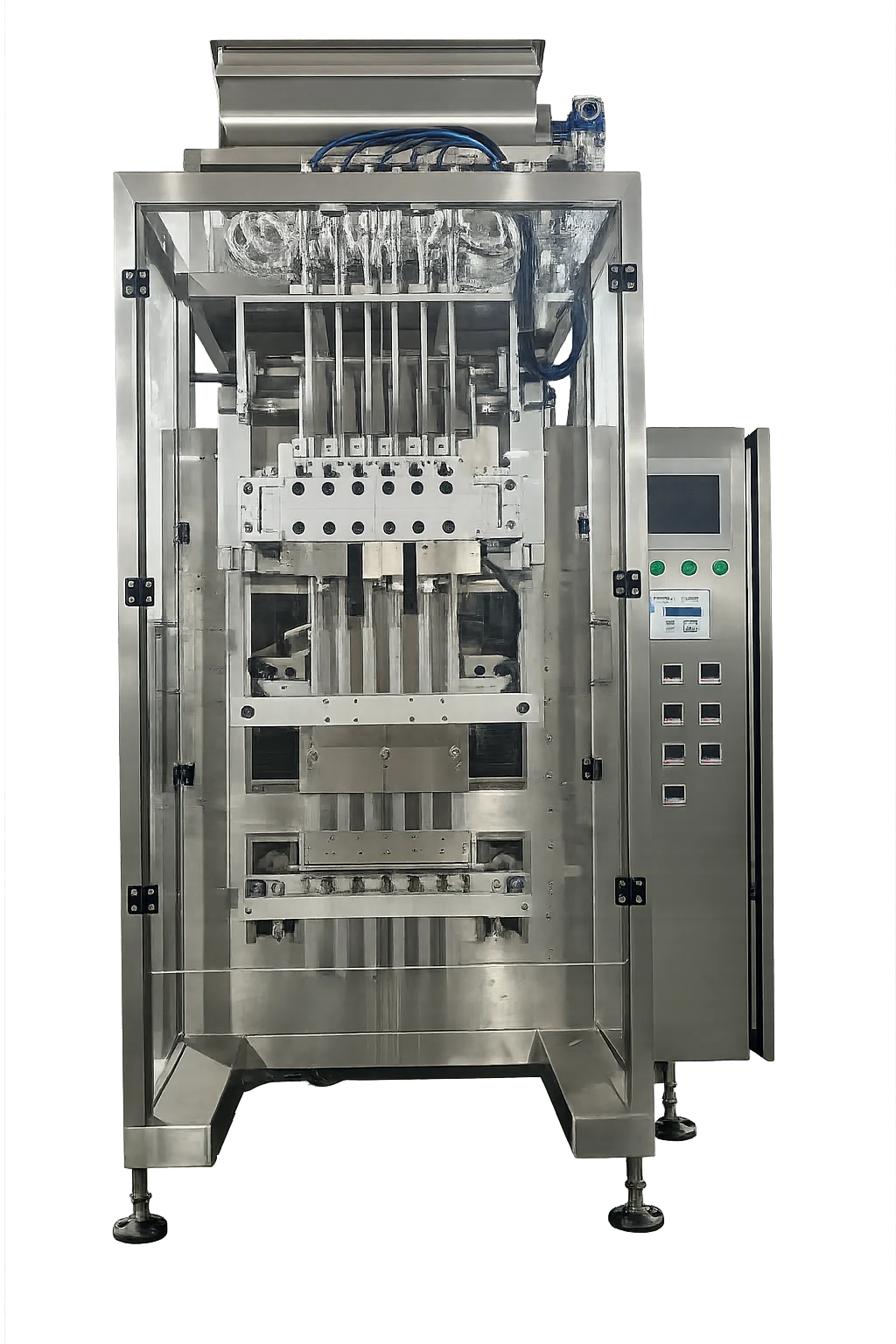
A standalone stick pack machine performs the agreed primary packaging task, such as forming, dosing, sealing and cutting sticks. It may still require product supply, coding or discharge equipment. Standalone does not mean the machine has no interfaces or that the buyer can ignore what happens before and after it.
Clarify the delivery boundary. Does the supplier's responsibility end at a discharge chute, an inspection conveyor or a collection table? Identify what the customer must provide to make the finished sticks usable. Two standalone quotations can describe different scopes even when the machine photographs look similar.
Integrated packaging line
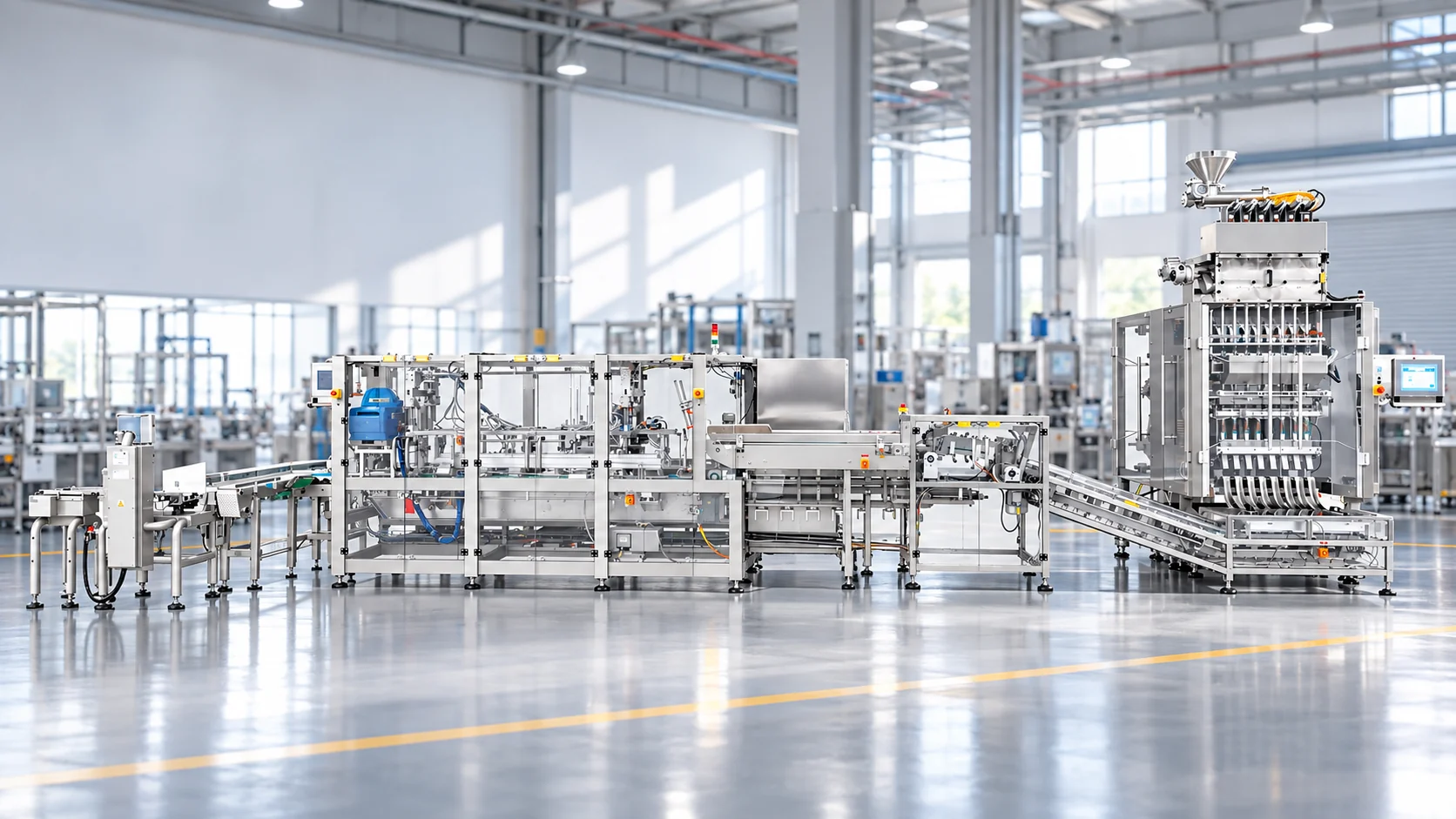
An integrated line connects selected stages through an agreed material flow and control arrangement. It might include transfer, counting, grouping, inspection and carton or outer-bag handling. The exact sequence depends on the product and final package. A list of equipment names alone does not establish that their interfaces have been engineered.
COTECH's stick pack line page presents feeding, primary packaging and downstream handling as stages to define around the project. Use that structure to describe the required endpoint and the equipment already on site, then confirm which functions are included in the proposal.
2. Specify the final pack before choosing automation
Describe how the product will be sold or distributed. A 20-stick carton, a mixed-flavor assortment, a bulk outer bag and individually supplied sticks create different requirements. Specify the count, arrangement, carton or bag dimensions, opening experience and relevant coding.
- Finished stick dimensions, seal geometry and relevant handling sensitivity.
- Number of sticks per saleable pack, including alternative formats.
- Required orientation, grouping and any mixed-product rules.
- Carton or outer-bag material and the available production-intent samples.
- Inspection and identification requirements for sticks and outer packs.
- Accepted packs per shift and the planned product mix.
Do not leave the carton decision until the primary machine is complete. Transfer and grouping equipment may depend on pack dimensions and the way the sticks fit into the final package. A late change in carton count or orientation can affect both mechanical handling and control logic.
Use the same format set in every quotation
Provide the smallest and largest purchased formats and identify any future options separately. Ask which change parts are included and which require additional equipment. A supplier should not be expected to guarantee an undefined assortment simply because the system is called an integrated line.
3. Measure the current handling task
Observe how finished sticks move through the existing process. Record where they accumulate, how counts are confirmed and what causes interruptions. Include carton replenishment, inspection, rejected-pack removal and finished-carton handling. An isolated packing demonstration may omit the activities that dominate a real shift.
If manual work is involved, evaluate it under representative and safe conditions with the operations team. Do not assume a fixed operator rate or staff reduction from a supplier's brochure. Product dimensions, handling difficulty, pack count and the work arrangement all influence what people can sustain.
Separate different reasons to automate
A capacity problem, a counting problem and a product-handling problem may require different changes. Increasing primary speed does not solve uncertain carton counts. A counter does not automatically prevent damage during insertion. Identify the problem first so the proposed automation addresses a concrete requirement.
For a new factory, build a task map rather than inventing a current bottleneck. Show the planned sequence, staffing assumptions and expected demand. Mark uncertain activities for trial or commissioning review. That makes the comparison useful without presenting assumptions as measured production experience.
4. Treat transfer and counting as engineering functions
Finished sticks need controlled movement from the primary machine to the next stage. Discuss their direction, spacing, surface condition and acceptable handling. Flexible packs can overlap, rotate or catch during transfer, so a conveyor connection should be assessed with representative sticks rather than assumed from equipment height alone.
Define how a count is created and maintained
Ask what the counter detects and how the system distinguishes valid sticks from rejects, overlapping packs or a restart sequence. If sticks are removed after counting, explain how the final group is reconciled. The proposal should identify the point at which the count becomes the accepted outer-pack count.
Specify the response to a missed detection, double detection or interrupted group. Can the equipment identify and reject the affected group? Does an operator need to clear it and restart the sequence? Those are project-specific control decisions, not capabilities that follow automatically from the presence of a sensor.
| Boundary | Question to resolve |
|---|---|
| Primary discharge | What is the condition, orientation and arrival pattern of sticks? |
| Inspection to counting | How are rejected sticks excluded from accepted groups? |
| Counting to insertion | How is the complete group retained and verified? |
| Secondary packaging | Which carton or bag formats are supported and tested? |
| Finished-pack release | What checks establish an acceptable final unit? |
5. Balance capacity and define useful accumulation
Convert stick output into the unit handled downstream. In a hypothetical requirement, 180 accepted sticks per minute packed into 15-stick cartons represents 12 cartons per minute on average. These figures are planning inputs, not a COTECH line rating. The downstream arrangement must also handle the actual arrival pattern and replenishment tasks.
Ask whether an accumulation stage is needed for short interruptions. At the example rate, two minutes of incoming output would equal 360 sticks. That arithmetic does not establish that a particular buffer can hold or handle them. Pack condition, arrangement, service access and the configured recovery sequence still require assessment.
A buffer postpones a bottleneck; it does not remove one
If downstream accepted capacity remains below upstream production for an extended period, the buffer eventually fills. Define how the primary machine responds before overflow occurs. Review controlled stopping, restarting and the treatment of partially completed groups with the supplier's technical team.
Compare sustained final-pack output over a stated period, with rejected units and interruptions recorded. The fastest individual station is not the same as the complete line's usable capacity. Ask which production condition the supplier intends to demonstrate and which limitations remain at the customer's site.
6. Decide what inspection needs to prove
Inspection may address fill quantity, seals, coding, count or carton condition. Specify which defects matter and how each will be detected. Separate detection from rejection and from the record needed to confirm that the affected product was removed.
Do not confuse outer weight with verified stick count
An outer-pack weight check can be useful, but its ability to detect a missing stick depends on stick-weight variation, carton tare and the agreed limits. It should not automatically be described as proof of exact count. Ask for an application-specific evaluation and challenge cases relevant to the purchased configuration.
Define where rejects go and how operators prevent them from returning to accepted product unintentionally. If rework is permitted, document its procedure and count reconciliation. A line can lose traceability when partially filled cartons or loose sticks are reintroduced without a controlled method.
Keep acceptance criteria linked to the final package. A primary machine may produce satisfactory sticks while a cartoning stage damages them or applies the wrong code. Trial the finished saleable unit as well as the components leading to it.
7. Define controls and responsibility at every interface
Mechanical alignment is only part of integration. The stations also need agreed responses to ready, running, stopped, faulted, starved or blocked conditions as relevant to the design. Identify the owner of each signal, what it means and what the other equipment should do.
OMAC's PackML information describes a common approach to machine behavior and consistent data. It can inform an integration discussion, but its existence does not establish that a quoted COTECH line includes PackML or that two machines will connect without additional work. Confirm the actual controls scope.
Agree who owns the complete line behavior
For a project involving several suppliers, identify who reviews the complete sequence and resolves interface problems. Ask who provides drawings, signal descriptions, commissioning changes and the final handover record. Responsibility should be stated in the purchase scope rather than assumed because one supplier provides the largest machine.
Safety integration needs competent review across the complete arrangement. Authorized personnel should evaluate the relevant protective functions using an agreed procedure. Do not bypass guards or create hazardous faults merely to demonstrate recovery. Keep formal compliance claims tied to the applicable evidence and destination requirements.
8. Evaluate changeovers and expansion realistically
A line may need coordinated changes to stick geometry, count, carton tooling, coding and transfer settings. Ask which settings can be stored and which require mechanical changes. Inspect the operator procedure and identify the conditions used for any quoted changeover time.
Mixed-product or promotional cartons introduce additional requirements. Explain how products are identified, how the required combination is established and what prevents a wrong assortment. Do not treat a standard single-product counter as an automatic solution for every future mixed pack.
Consider staged automation
Some buyers can begin with primary packaging and a defined collection process, then add handling stages as demand becomes clearer. Review whether the initial discharge and layout permit that plan. Space, pack orientation and control interfaces may need preparation even when the downstream equipment is purchased later.
A phased approach is not automatically cheaper or better. It can involve additional integration and commissioning work. Compare its advantages and responsibilities with a complete purchase using the same final-pack requirements, and make any future capability conditional on a clear technical review.
9. Compare the complete purchase scope and site preparation
Compare included product supply, primary packaging, transfer, inspection, counting and secondary packing stage by stage. Identify tooling, spares, training and documentation. Separate the machine price from the customer's work to prepare utilities, access and existing-equipment interfaces.
A business case should use the buyer's demand, actual handling tasks and agreed performance evidence. Avoid claiming a fixed payback period or labor saving without the necessary operating data. Reliability, repeatable count and reduced handling can be valuable goals, but their financial effect needs a defined basis.
During installation preparation, confirm floor layout, service clearance, unloading access and the complete electrical and pneumatic requirements. Check consumable replenishment routes and finished-pack removal. A compact equipment footprint is not sufficient if operators cannot maintain or supply the line safely.
10. Test the connected workflow before shipment
Plan factory testing around representative product, sticks and outer-pack materials. Observe startup, steady running, replenishment, authorized stops and restart. Include the agreed fault and reject cases using safe procedures. Record accepted finished packs rather than only the primary machine's counter.
Review the count of an interrupted group, the status of partially filled cartons and the response to downstream unavailability. A demonstration of each station separately does not show that the connected recovery sequence works. Assign unresolved items and identify those that require site testing with existing equipment.
The packaging machine FAT checklist provides an acceptance framework. Before shipment inspection, reconcile the accepted configuration, change parts and documents. Keep installation, training and site acceptance responsibilities visible in the handover.
Frequently asked questions
When should we buy an integrated stick pack line?
Evaluate one when transfer, count control or secondary packaging is a recurring constraint and the final-pack requirements are sufficiently defined. Compare the complete workflow's accepted output and operating tasks. Integration should address a measured or clearly specified need rather than simply add equipment after the primary machine.
Does an integrated line always include a cartoner?
No. It includes the stages defined in the project scope, which may end at collection, outer-bag handling or cartoning. Ask for a stage-by-stage equipment and responsibility list. Confirm the endpoint, format range and acceptance conditions instead of inferring them from the word integrated.
Can a counter guarantee the correct number of sticks in each carton?
Only the configured and tested counting, transfer and insertion process can support that acceptance claim. Consider rejects, overlapping sticks and interrupted groups. Define how the final count is established and what happens to uncertain groups. A sensor specification alone is insufficient evidence.
Can we connect a new machine to an existing cartoner?
Potentially, after reviewing stick condition, capacity, orientation, format range and controls. Provide drawings and operating information for the existing equipment. Identify who owns the interface design and commissioning. Similar conveyor height does not establish compatible material flow or restart behavior.
Is phased automation suitable for a small manufacturer?
It can be useful where demand and product mix are still developing, provided the initial layout supports later integration. Compare the current manual or existing process with the proposed stages. Record the future interfaces and additional work rather than assuming expansion will be a simple equipment attachment.
What information does COTECH need for a line discussion?
Provide product characteristics, stick size, portion, film, sticks per final pack and accepted output. Add carton samples, format changes, inspection needs, utilities and existing equipment details. The stick pack line page offers a starting point for defining the configuration.
Conclusion: automate the production task you actually need
The choice between a standalone stick pack machine and an integrated line depends on the final package, handling requirements and usable output. Counting, transfer and cartoning should be selected as defined engineering functions, with clear interfaces and acceptance evidence. More equipment does not automatically produce a better workflow.
Describe the current or planned process, define the purchase boundary and test the connected sequence. That preparation helps an overseas buyer choose a practical level of automation and makes the handover easier for the team that will operate it.
Define the scope of your stick pack line
Send COTECH your product, stick dimensions, sticks per outer pack, accepted output target and existing equipment details. Ask which transfer, counting, inspection and secondary packing functions should be included in the project.
Get a Quote