Introduction: what does a stick pack machine actually cost?
A useful stick pack machine cost starts with a dated quotation for a defined product, pack format and production scope. Compare the machine configuration first, then add tooling, testing, delivery, installation and recurring operating costs. A low advertised price is not a complete project budget, and an unsupported market average cannot replace an application-specific quotation.
This guide is for overseas brands, contract packers and manufacturing teams buying equipment for supplement powders, coffee, granules or liquid portions. It explains how to compare proposals without assuming that identical machine descriptions include identical equipment. The objective is a decision your purchasing, production and finance teams can all understand.
COTECH manufactures sachet and stick pack equipment in Foshan, China. Its stick pack machine range provides starting points for product discussions. Final pricing, configuration and performance conditions belong in the project quotation; this article does not present hypothetical numbers as COTECH selling prices.
1. Separate machine price, installed cost and ownership cost
Machine price is the amount charged for the equipment and services explicitly included in a proposal. Installed cost adds the work needed to bring that equipment into usable operation at your site. Ownership cost includes the resources consumed over the period you choose to evaluate. These are different purchasing questions.
PMMI's explanation of its total cost of ownership guidelines supports looking beyond acquisition price to the costs of operating machinery. For a stick pack project, turn that principle into an itemized scope rather than applying an arbitrary annual percentage to the invoice.
Choose one comparison period
Use the same production volume, product mix and evaluation period for every proposal. Record whether costs are one-time, annual or per pack. Keep financing, taxes and depreciation separate from the engineering operating model unless your finance team deliberately includes them. This prevents a spreadsheet from mixing cash requirements with accounting measures.
2. Understand the configuration that drives the quotation
Product characteristics can influence the filler, hopper, transfer arrangement and contact components. A dusty powder and a viscous gel are not interchangeable applications. Compare a proposed powder stick pack machine with other powder proposals using the same blend and dose range, rather than comparing it with an unspecified liquid machine.
Lane configuration, pack dimensions, sealing arrangement, controls and included inspection also affect scope. More lanes may increase simultaneous production, but they can introduce additional forming and filling positions to set, clean and maintain. Ask which configuration is included for each purchased stick width.
Clarify options before comparing totals
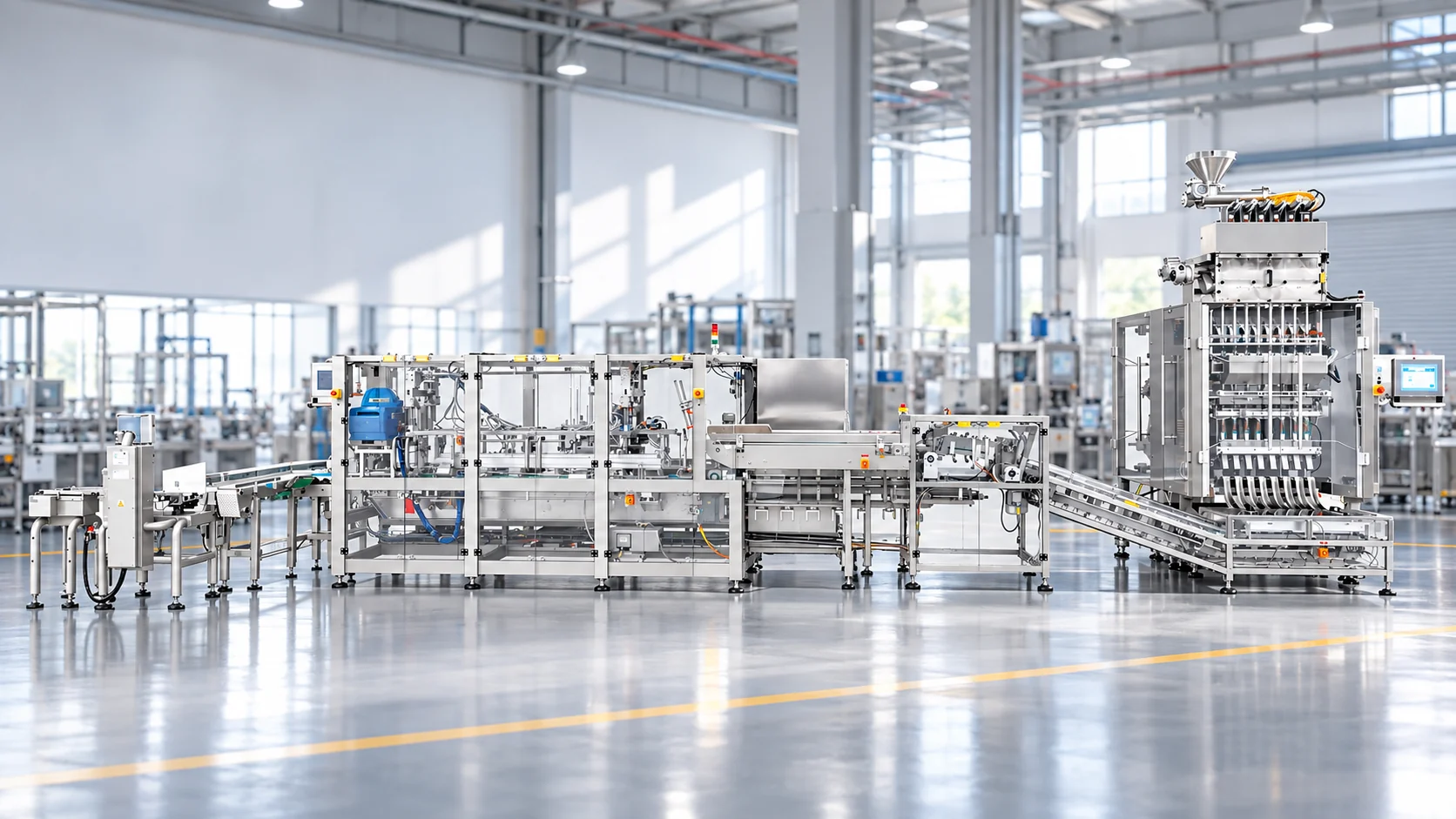
Coding, weight inspection, reject handling, product transfer and counting may be separate line items. Confirm whether each item is included, optional or outside supply. Do not assume that a photograph of a complete line means the quoted price includes every visible component. Request a layout tied to the equipment list and mark the boundaries between suppliers.
3. Build a quotation scope matrix
Give suppliers the same requirements and ask them to complete a comparison sheet. Use explicit descriptions such as the number of format sets supplied, rather than a checkbox saying that the machine is flexible. An unresolved item should remain visible until someone confirms its scope and price.
| Scope item | What to confirm | Why it affects the budget |
|---|---|---|
| Filling and forming | Product, dose range, active lanes and included formats | Defines the actual production task |
| Product supply | Hopper, transfer equipment and interfaces | May require equipment beyond the packer |
| Inspection | Coding, weight checks and reject arrangement | Changes equipment and integration scope |
| Testing and training | Samples, agreed protocol, sessions and documents | Requires time, material and personnel |
| Site and delivery | Packing, transport scope, utilities and installation | Separates machine supply from local work |
Ask who owns each interface and who verifies the completed function. A device can be included in the price while its upstream feed or downstream conveyor remains excluded. Written boundaries make these gaps easier to identify before an order becomes a site problem.
4. Budget the work needed at the destination
An overseas machine purchase involves more than moving a crate. Request packed dimensions and weight, handling points and installation access requirements. Your logistics provider and local advisers can then estimate the transport and import elements appropriate to the destination and the agreed delivery terms.
Installation preparation should cover electrical supply, compressed air where required, product transfer, available floor space and service clearance. Confirm whether extraction, room conditioning or changes to downstream packing are part of the site project. Allocate responsibility instead of assuming that the machine supplier provides every utility connection.
Allow for people and materials
Include operator availability, training time, representative trial product and enough film for startup and evaluation. If supplier attendance is proposed, clarify the scope of travel, accommodation, working days and follow-up support in writing. These details should come from the actual commercial proposal; a generic installation allowance can hide substantial uncertainty.
5. Compare cost against accepted output
Nominal packs per minute can describe a mechanical condition rather than a whole-shift result. Your useful denominator is the number of packs meeting the agreed requirements during a defined production period. Specify the product, portion, film and planned changeovers beside every capacity assumption.
For a hypothetical example, a project with annual packaging-related costs of $120,000 and 6,000,000 accepted sticks has an allocated cost of $0.020 per accepted stick. At the same costs and 4,000,000 accepted sticks, the figure becomes $0.030. These invented inputs demonstrate arithmetic only; they are not supplier prices, forecasts or promised returns.
Keep the accounting boundary consistent
Decide whether that cost includes film, product giveaway and secondary packaging. Include the same categories in every option and avoid counting a loss twice. For production planning, use the companion guide to multi-lane stick pack capacity to define accepted demand and available time before assigning costs.
6. Put material loss and changeovers into the model
Film consumption includes saleable packs and material used during threading, setup, registration and rejected production. Compare measured or clearly estimated consumption for the same finished pack. Film price per kilogram alone cannot establish material cost per accepted stick when thickness, pack area or waste differs.
Product giveaway is another distinct item. If a hypothetical process averages 0.08 g above its operating target across 5,000,000 sticks, the excess is 400 kg. The calculation does not identify a suitable target or justify underfilling; it shows why stable dosing and a defensible filling target matter economically.
Test a realistic product schedule
A short, high-speed demonstration says little about a contract packer's frequent recipe changes. Estimate cleaning, format adjustment, line clearance and restart for the actual product mix. Record whether the assumptions come from factory testing, site records or a planning estimate. Replace estimates with evidence as the project develops.
7. Review service, spare parts and maintainability
Ask for the recommended startup spares and recurring wear parts associated with the purchased configuration. Identify components that need product-specific dimensions or drawings. A standard electrical component and a custom forming part may have very different replacement paths, so a single spare-parts percentage is a weak planning method.
Discuss how faults are reported, what information support needs and which response arrangements are included. Language, time zones, available technicians and access to maintenance instructions all affect the customer's ability to recover production. Put service expectations into the purchasing discussion before equipment shipment.
Assess the customer's maintenance capability
Identify tasks your team can perform and tasks requiring specialist help. Review access to sealing components, cleaning areas and change parts during the demonstration. Serviceability is useful when it matches the site's people, tools and spare-part inventory, not simply when a brochure describes the machine as easy to maintain.
8. Test the assumptions that could change the decision
Use a small scenario table rather than one confident payback number. Vary accepted annual volume, film consumption, labor arrangement and changeover frequency independently where practical. This shows which uncertain input has the greatest effect on cost per pack and where better evidence would improve the purchase decision.
If the business case depends on removing manual work, identify the exact operation and staffing change. Automation may transfer effort to replenishment, inspection or maintenance instead of eliminating it. Use the customer's actual labor plan and avoid assuming that a generic integrated line always removes a fixed number of operators.
Separate demand from installed capacity
Additional output has commercial value only if the business can use it. Evaluate confirmed demand, seasonal requirements and realistic expansion plans. Compare a standalone machine with an integrated stick pack line when downstream counting or secondary packing is part of the problem, while keeping untested future applications outside the confirmed performance scope.
A worked comparison: higher purchase price, different running assumptions
Consider two hypothetical proposals assessed over three years, each producing 5,000,000 accepted sticks annually. Option A has an installed cost of $90,000 and annual operating costs of $55,000. Option B has an installed cost of $110,000 and annual operating costs of $45,000. These are invented teaching inputs, not market benchmarks or COTECH quotations.
Using a simple undiscounted cash-cost model, option A totals $255,000 over the period and option B totals $245,000. Dividing by 15,000,000 accepted sticks gives approximately $0.0170 and $0.0163 per stick respectively. The arithmetic shows why purchase price alone can lead to a different ranking from a complete cost comparison.
Inspect the operating-cost assumptions before using the result
For the comparison to mean anything, both annual totals must cover the same items. State whether labor, energy, maintenance, consumables, film and secondary packaging are included. Exclude bulk product cost from both, or include it consistently with the same product and giveaway assumptions. Do not add depreciation to a cash model that has already counted the full installed purchase cost.
This simplified example excludes financing, taxes, residual value and discounting. Your finance team can add appropriate treatments, but the engineering input still needs evidence. If option B's apparent saving depends on an untested reduction in cleaning time or an assumed operator reassignment, mark that dependency and investigate it before selecting the equipment.
Now test the customer requirements that could reverse the result. More frequent flavor changes may alter labor and startup losses; lower demand may spread fixed costs across fewer packs. An additional format may require tooling and fresh trials. Keep these changes visible in a revised scenario instead of treating the original cost per stick as a permanent characteristic of the machine.
9. Connect the budget to testing and handover
Agree acceptance conditions before ordering. Define the product and film, running conditions, sampling, output calculation and records required for factory testing. A priced acceptance scope helps both parties understand what the demonstration will establish and what still needs verification after installation.
Shipment inspection should confirm the agreed configuration, identification, accessories, spare parts and documents. It is different from validating the process at the customer's site. Keep a signed equipment list, relevant drawings and an open-issues record so that the receiving team can check the delivery against the same scope used for purchasing.
Use a practical approval checklist
- Each quoted component has a defined function and supply boundary.
- Included formats and untested future formats are distinguished.
- Installation responsibilities and utilities have named owners.
- Acceptance evidence addresses product, film and accepted output.
- Operating assumptions have a source and a consistent cost period.
Keep quotation revisions dated and identify the assumptions that changed. Ask how long commercial terms remain valid and which customer approvals are needed before manufacturing or film procurement begins. A shared revision log helps avoid comparing a newly expanded proposal with an older, smaller scope during the final purchasing review.
This record makes later changes easier to evaluate. When a new pack size or inspection device is added, update the relevant scope, test and operating assumptions together instead of changing only the headline purchase price.
Frequently asked questions
How much does a stick pack machine cost?
Request a dated price for your actual product, dose, format, lane configuration and equipment scope. Public listings may describe different machines or omit required items. COTECH can review your requirements and identify the proposed configuration; this guide deliberately avoids presenting an unsupported universal price range.
Is a multi-lane machine always cheaper per stick?
No. Cost depends on accepted volume, product mix, operating time and downstream handling. Additional lanes can be useful for suitable demand, but unused capacity, frequent changes or a bottleneck elsewhere can change the calculation. Compare complete scenarios using the same assumptions.
Which costs are commonly outside the machine quotation?
Possible exclusions include local utility work, product transfer, particular format parts, inspection, freight, destination charges, training or installation attendance. The actual exclusions depend on the proposal. Ask for written included, optional and excluded lists rather than relying on a standard checklist alone.
How should we estimate film waste?
Use records or a representative trial for your pack and film. Include startup, threading, registration and rejected production under defined conditions. Keep estimated and measured values separate. A supplier's demonstration with another laminate does not establish your own material yield.
Can we calculate payback before factory testing?
You can prepare a planning model, but identify uncertain costs and output assumptions. Use customer demand and operating records where available. Update the model when the configuration and trial evidence are confirmed instead of presenting an early estimate as a guaranteed return.
What should we send for an itemized quotation?
Send product characteristics, target portions, stick dimensions, film data, accepted output and the destination country. Add batch sizes, changeovers, utilities and downstream needs. The packaging machine quotation brief can help organize the initial enquiry.
Conclusion: compare a production scope, not just a price
A useful stick pack machine budget connects the purchased configuration to installation, testing and operation. Identify what each proposal includes, calculate costs against accepted output and show where assumptions remain uncertain. This creates a stronger comparison than choosing an advertised price without knowing the equipment behind it.
Bring purchasing, production, maintenance and finance into the same scope review. Their combined requirements help turn a quotation into a practical production plan and give COTECH a clear basis for discussing the equipment, trials and support your project needs.
Build a comparable stick pack equipment quotation
Send COTECH your product, serving range, stick dimensions, film specification, required accepted output and installation country. Ask for an itemized configuration, test scope and list of exclusions so your team can build a complete project budget.
Get a Quote