
Introduction: how should hygroscopic powder be packed into sticks?
Packaging a hygroscopic powder requires control of the material before sealing as well as an appropriate finished package. Define the formulation's sensitivity, open exposure, holding time and room conditions, then evaluate powder transfer, dosing and seals using representative material. A high-barrier film cannot undo moisture uptake that occurred while powder was waiting in an open container or hopper.
This guide is for powder brands, contract packers and overseas equipment buyers preparing customer requirements for drink blends, dairy-based ingredients and other moisture-sensitive formulations. It focuses on exposure before closure, complementing the separate film selection article rather than repeating a laminate comparison.
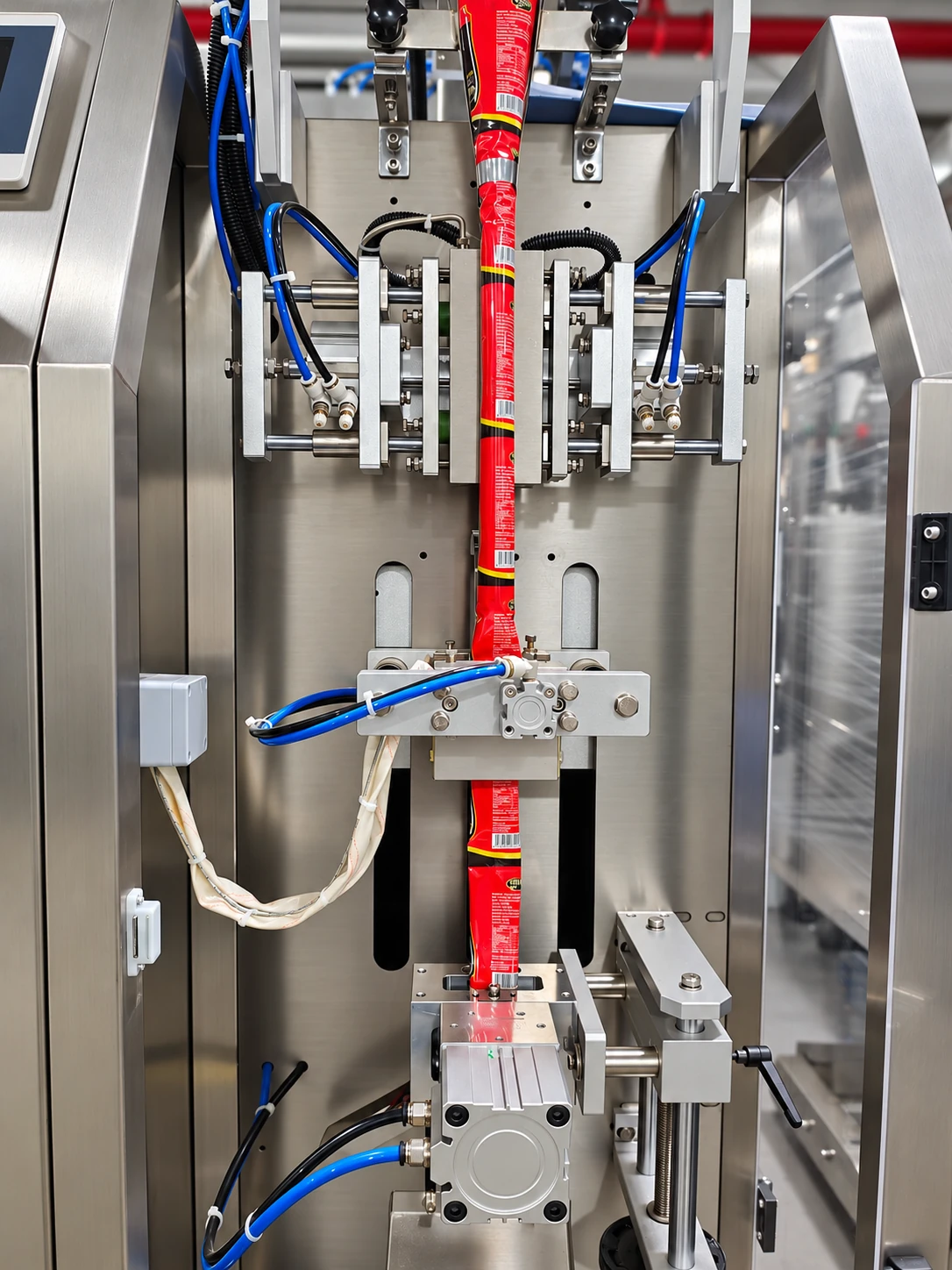
The COTECH powder stick pack machine shown on its product page provides an auger-dosed, single-lane starting point for an application review. Its photograph does not establish an integrated dehumidifier, controlled atmosphere or suitability for every moisture-sensitive blend.
1. Establish the sensitivity of the finished formulation
Hygroscopic behavior concerns a material's interaction with moisture from its surroundings. The finished recipe matters: ingredient proportions, processing history and physical form can influence handling. Do not assign one ingredient's datasheet to a multi-ingredient blend without the product team's assessment.
The Tetra Pak Dairy Processing Handbook discusses moisture-related characteristics of dairy powders. It provides useful background on why powder properties matter, but its product examples do not establish operating limits for every drink mix or supplement formulation.
Ask for the evidence behind the requirement
Request available observations about caking, stickiness, flow change and stability under stated conditions. Identify whether a limit comes from a product study, an ingredient recommendation or an untested assumption. Keep uncertain items visible until the responsible team has evaluated them.
Describe the actual concern. A powder becoming harder to discharge is a different observation from a finished product failing its stability specification. The equipment trial and the product assessment may need related but separate evidence.
2. Separate room humidity, moisture content and water activity
Relative humidity describes the surrounding air at a stated temperature. Moisture content describes water in the material using a defined method and reporting basis. Water activity characterizes the availability of water under its measurement conditions. These are different measurements, not three interchangeable ways to express one percentage.
Ask the product team which measurements are relevant to the formulation and why. Record method, sample handling and temperature where applicable. A room instrument cannot independently establish the moisture condition of a powder sample, and a powder result cannot fully describe the air encountered during transfer.
Avoid a universal room setpoint
There is no single relative-humidity number in this guide that qualifies every powder stick application. Suitable conditions depend on the formulation, exposure pattern and evidence. A value copied from another ingredient or another factory can create false confidence.
Use a requirements sheet that distinguishes the environment to maintain, the product characteristics to verify and the finished-pack properties to assess. Assign each measurement to an appropriate instrument, method and responsible person.
3. Map exposure from container opening to the closed pack
Trace receiving, staging, container opening, any preparation, transfer, hopper holding and filling. Identify open surfaces and delays. Powder may encounter the packaging room well before it reaches the machine, so observing only the final dosing step misses part of the application.
| Stage | What to record | Question for the project team |
|---|---|---|
| Staging | Container condition and temperature history | When can material be opened for production? |
| Transfer | Open points, route and interruptions | What exposure does the proposed route introduce? |
| Hopper holding | Loaded quantity, delay and remaining product | What holding condition should be evaluated? |
| Filling and sealing | Powder behavior and seal-area condition | Does the actual run remain within the product brief? |
Use timestamps and material identity rather than a statement that powder is only exposed briefly. Different teams can interpret briefly very differently. The objective is a process description that a trial can represent.
4. Review temperature changes and condensation risk
Material and equipment can arrive from conditions different from the packing room. As explained in Vaisala's dew-point overview, condensation is linked to cooling conditions. Review the relationship between surface temperature and the surrounding air's dew point. It cannot be assessed from room relative humidity alone.
Ask the site's environmental specialists how relevant temperature transitions should be managed and measured. Keep product containers under their approved handling instructions. Do not improvise a warming or drying procedure from a packaging article, especially when the formulation's stability requirements are still being defined.
Include startup and non-routine periods
A room measurement taken during steady production may not represent conditions after a long stop, during material deliveries or when doors and nearby operations change. Identify the relevant conditions for the intended facility and include them in installation preparation.
Request measurements at meaningful locations rather than relying only on a distant room display. Record where a sensor sits and what period its data covers. Those details help the team interpret whether the reading represents the powder's actual exposure.
5. Treat hopper loading and holding as process decisions
Specify how much powder is loaded, how it is replenished and what happens when packing stops. A large buffer may reduce loading frequency but increase the quantity waiting in the system. Whether that is acceptable depends on the formulation's requirements and the demonstrated process.
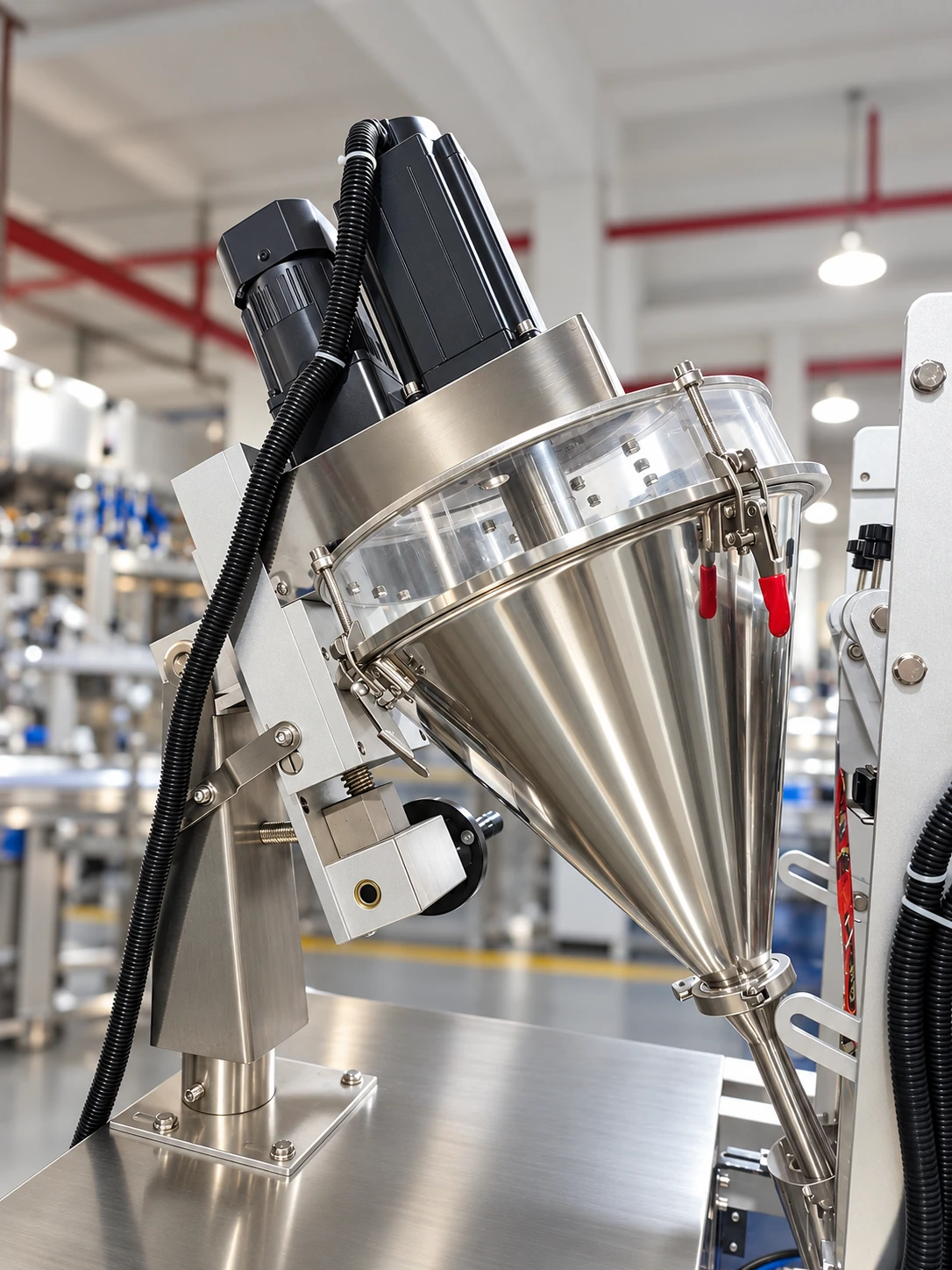
A lid or enclosed transfer point can change exposure, but it should not be described as airtight or humidity-controlled without evidence. Review seals, connections, access and the source of any air or gas used in a proposed system. Include those items explicitly in supply boundaries.
Define the remaining-material policy
Ask the product owner how residual or interrupted-run material is assessed and controlled. Do not assume that powder left overnight can automatically return to production because its container was covered. The equipment supplier should understand the intended operating pattern, while product disposition remains part of the buyer's approved program.
6. Distinguish environmental control from machine options
Room conditioning, localized enclosures, transfer-air arrangements and the packing machine are separate parts of a proposed process. Identify what each is intended to achieve and which party designs, supplies and verifies it. Do not treat a phrase such as moisture protection as a complete engineering scope.
If conditioned air or another gas is proposed, ask about its purpose, relevant quality requirements, distribution and monitoring. Confirm compatibility with the powder and equipment. The application review should identify the required specialists rather than infer that a standard COTECH machine includes the complete arrangement.
Gas flushing is not a universal drying step
A gas option used for another packaging objective does not automatically remove moisture already held by the powder. Likewise, adding room dehumidification does not independently qualify every product or stop. Evaluate the actual material and its full handling sequence.
Compare alternatives using stated customer requirements and measurable evidence. A more elaborate system is not automatically necessary, and a simple enclosure is not automatically sufficient. The decision needs the formulation, exposure and intended operating pattern.
7. Connect pre-seal control with the finished package
Once powder is inside the pack, film, seals, opening features and handling affect protection. Provide the proposed laminate and the conditions attached to its barrier data. A film datasheet is an input to evaluation, not a complete product shelf-life result.
Check filled packs for powder in the closure area and relevant changes in appearance or flow. Use the seal integrity testing guide to distinguish visual condition, mechanical strength and leakage. A good-looking end seal cannot prove every aspect of protection.
Keep the two exposure periods separate
Pre-seal exposure concerns what happened before closure. Finished-pack performance concerns what happens afterward under defined conditions. Improving one period cannot be assumed to erase a problem in the other.
Ask the product and packaging teams to connect their evidence without merging the claims. The machine supplier can document relevant trial conditions, while product stability and commercial storage statements need the responsible owner's assessment.
8. Make the powder trial representative of exposure
Describe the sample's history before it reaches the factory. Identify its lot, container, preparation and relevant available measurements. Agree what the demonstration will represent: a short application test, a defined hold condition or a broader production evaluation.
- Record relevant room and material conditions using agreed methods.
- Track opening, loading, refill, stop and sealing events.
- Observe flow change, buildup and dosing behavior over the test period.
- Inspect the finished stick and collect agreed laboratory samples.
- Keep material results separate from machine and package observations.
- State conditions not represented and assign the next evaluation.
Factory testing should not deliberately condition a sensitive powder outside its approved handling requirements simply to create a dramatic failure. Have the responsible product team define any study conditions and material controls before the trial.
Document time as well as a room reading
A single sensor value beside a photograph is a weak exposure history. Connect the measurement period with the powder's time in the process, including delays and remaining material.
A practical comparison: the same room, different waiting times
Consider two hypothetical runs using the same formulation and packing room. In one, containers are opened shortly before loading. In the other, opened material waits while the team completes an artwork change. Similar room readings do not establish an equivalent exposure history.
Record both sequences before drawing conclusions about the machine. If the second run behaves differently, investigate material, timing and other changed conditions using the agreed methods. The example does not assert that a particular waiting period will cause a specific powder to cake.
Choose evidence that can resolve the question
The product team may need measurements of the powder as well as observations at the filler. Retain sample identity and the relevant timing so the results can be interpreted together. Avoid changing the formula or adding a conditioning step simply to make a short demonstration appear successful.
If an acceptable exposure requirement is not yet established, keep that uncertainty in the purchasing plan. A supplier can help define what its equipment does without claiming to validate an unfinished product specification.
9. Carry exposure requirements through delivery
Before shipment inspection, retain the trial's material, film, configuration and relevant environmental record with the handover documents. Identify what was measured at the supplier and what still needs verification at the destination.
Installation preparation should address material storage, opening and staging areas, the transfer route, room resources and monitoring responsibilities. Confirm that the receiving team understands the product requirements before its first accepted production run.
Compare the destination with the trial
A powder packed successfully in one setting does not automatically behave the same way after different storage, transport or handling. Record meaningful differences in the receiving material and process. Decide which evidence remains applicable and which questions need further review.
Do not ask operators to compensate for an unresolved environmental problem only by changing the auger or seal settings. The issue may lie outside the packing machine and require another part of the project team.
10. Define a review trigger for formulation and process changes
Keep a controlled description of the evaluated product, portion, pack and handling sequence. Identify changes that should prompt review, such as a new supplier, modified recipe, different container, longer holding period or another room. Not every change needs the same evaluation, but the decision should be deliberate.
Use a short responsibility sheet covering product limits, environmental provision, machine operation, packaging evaluation and material disposition. This makes it easier to ask the right party a specific question when production conditions change.
Prepare an honest quotation brief
Separate demonstrated requirements from desired future capabilities. Ask the proposal to state its assumptions and exclusions, including any conditioning equipment supplied by others. A claim that a machine handles hygroscopic powders becomes meaningful only when the actual formulation and operating conditions are defined.
Include the exposure map with your enquiry. It turns a broad concern about moisture into questions that can be assessed during configuration, factory testing and destination startup.
Retain an exposure record that production can use
Keep the approved material identity, opening sequence, relevant monitoring locations and response responsibilities together. When an order returns, the team should be able to compare its planned handling with the evaluated condition. A product name and a room target written on separate documents may not make that relationship clear.
If monitoring equipment or a measurement method changes, ask whether the new results can be compared with the earlier record. Record the decision and its basis. Consistent documentation does not replace product evidence, but it helps preserve the meaning of evidence across teams, shipments and repeated production runs.
Frequently asked questions
What humidity is suitable for every powder stick application?
There is no universal value. Establish conditions for the formulation and exposure pattern using relevant evidence. Temperature, material history and measurement location also affect how room data should be interpreted.
Can high-barrier film prevent powder from absorbing moisture before filling?
It cannot protect material that is still outside the sealed package. Review open containers, transfer and hopper holding separately from the protection provided after closure.
Does a hopper lid mean the powder is humidity-controlled?
No. Review the complete enclosure and its connections, air exchange and any conditioning arrangement. A photograph of a covered hopper does not establish a controlled atmosphere.
Are moisture content and water activity the same?
No. They describe different material characteristics under defined methods and conditions. Ask the product team which measurements support its requirements rather than substituting one result for another.
Does gas flushing dry a moisture-sensitive powder?
Do not assume that it does. A gas option has a specific purpose and scope. It does not automatically reverse moisture uptake or establish product stability; evaluate the formulation and process.
What should a buyer send before a machine review?
Provide product specifications and samples, exposure requirements, handling sequence, portion, film and pack drawing. Identify planned room resources and which conditions a factory trial should represent.
Conclusion: protect the process before relying on the pack
A hygroscopic powder project needs an exposure plan as well as a packaging specification. Establish the formulation's requirements, separate environmental and material measurements, and evaluate loading, holding and sealing together. Preserve the conditions and open questions through shipment and installation. This gives the buyer a practical basis for reviewing powder stick equipment without confusing a film claim or hopper photograph with complete moisture control.
Review your powder, exposure conditions and pack together
Send COTECH your formulation's relevant physical specifications, proposed portion and stick, film data and handling conditions. Include your product team's exposure requirements so the equipment discussion can identify what to test and which environmental interfaces remain outside machine supply.
Send Your Requirements