
Introduction: what makes a powder machine suitable for small batches?
A small-batch powder stick pack machine should be evaluated around repeatable setup, usable formats, material consumption and the time needed to release each short order. A single-lane configuration can be a candidate when the application and accepted output fit, but lane count alone does not establish economical production. Compare the complete order sequence, including preparation, changes, checks and downstream packing.
This guide is for brands moving beyond hand-prepared samples, manufacturers developing new products and contract packers serving several short-run customers. It focuses on pilot-to-repeat-order work, rather than repeating the separate multi-lane capacity guide.
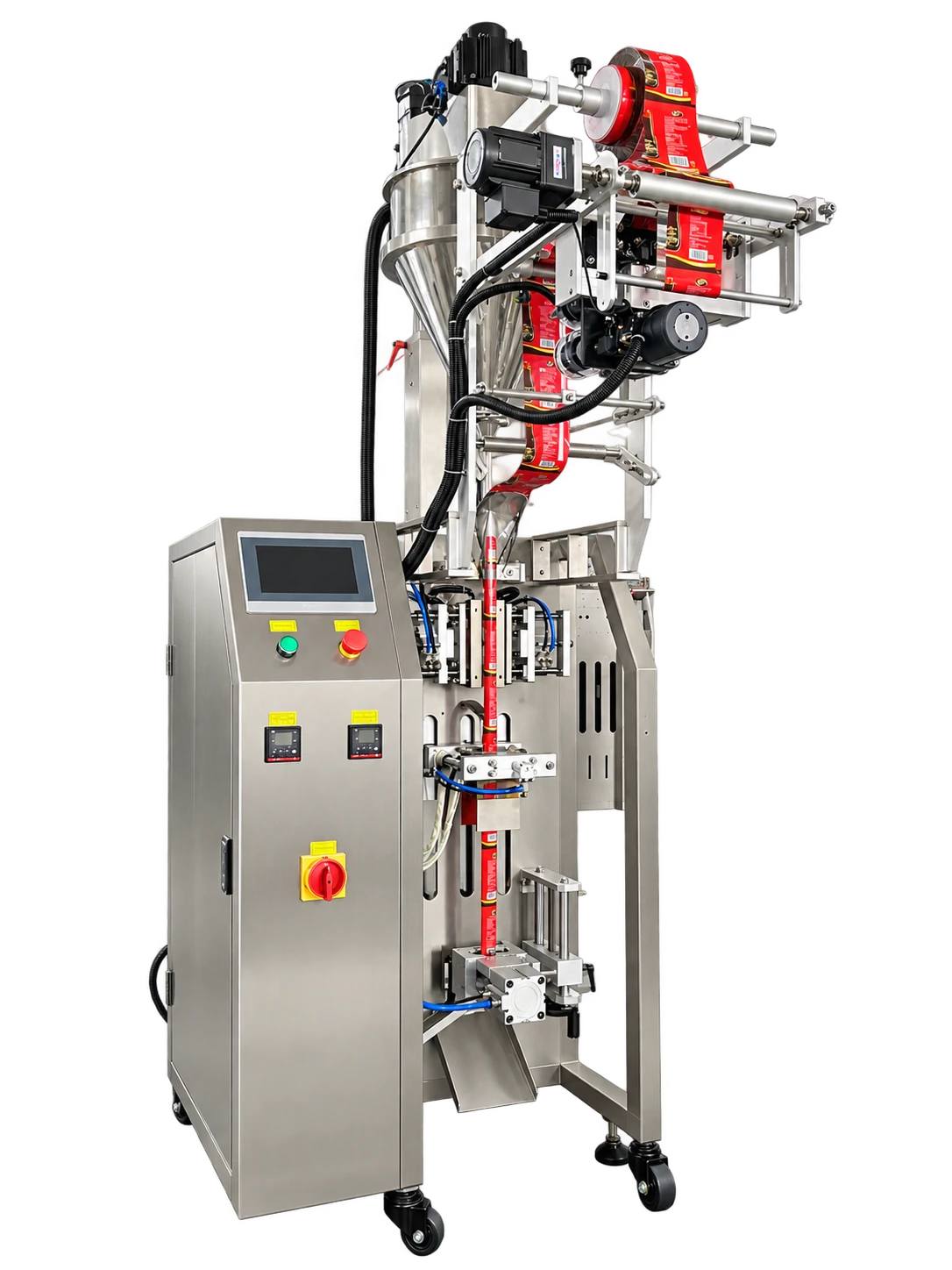
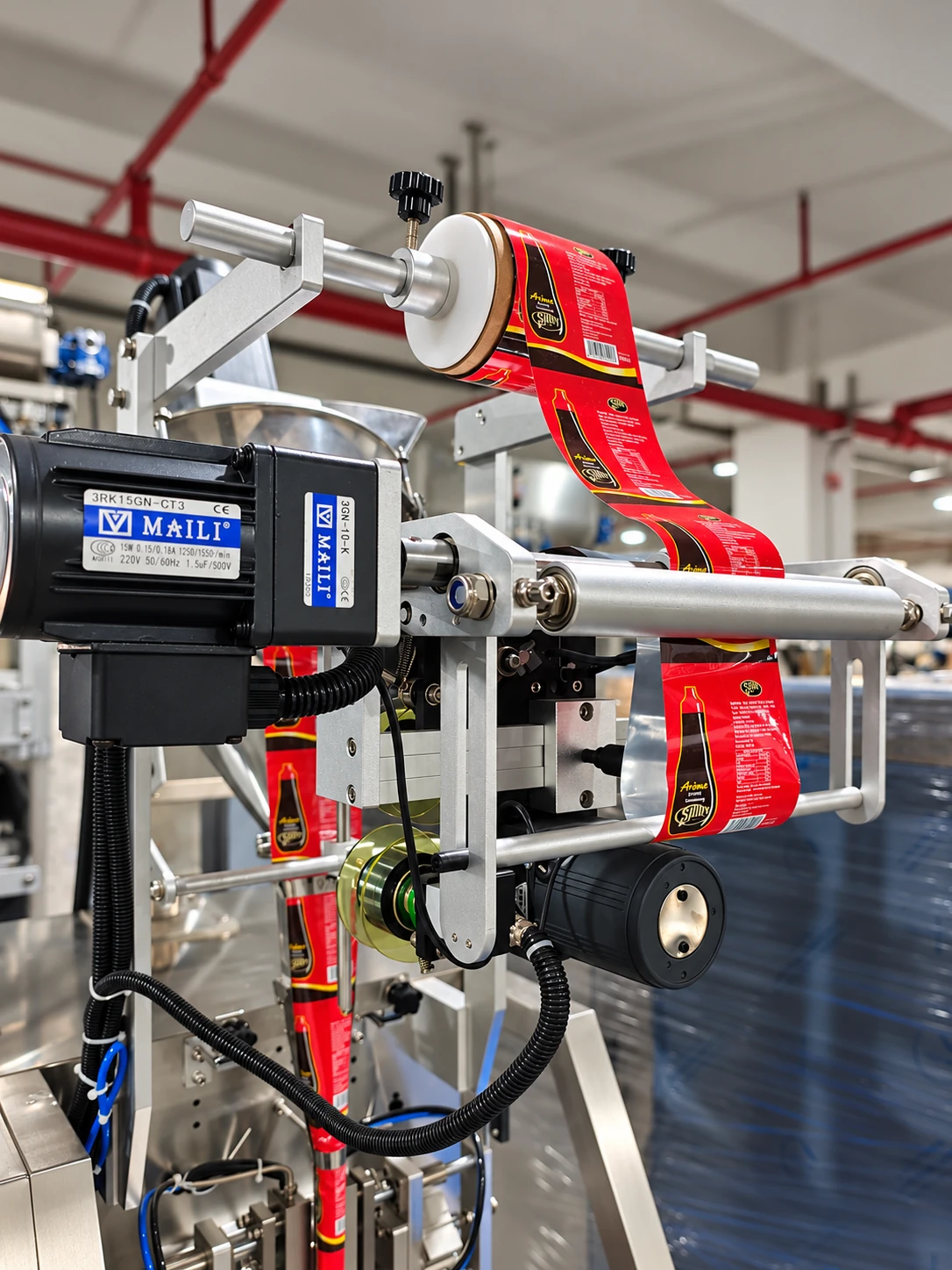
COTECH's single-lane powder stick pack machine is shown with auger dosing, back-seal forming and separate sealing controls. It offers a concrete configuration to discuss. No rated speed, minimum batch or ability to handle every future formulation is inferred from that photograph.
1. Define a batch in operational terms
A batch description should identify the powder, portion, film, artwork and required accepted quantity. Different businesses use the word batch for different things: one formulation lot, a customer order or a production campaign. Clarify which meaning controls scheduling and material records.
Separate exploratory packs from saleable orders. An early development run may answer whether a serving fits or a film can be formed. A repeat commercial order also needs approved specifications, material identity, checks, records and an outer-pack arrangement.
Identify the learning objective
Write what each trial must resolve before allocating product and film. Examples include usable pack dimensions, powder discharge, coding position or repeatable setup. A small number of attractive samples can support an early decision without establishing routine production performance.
Keep the remaining qualification work visible. Calling a machine suitable for pilot work does not mean all development questions disappear when the first finished stick looks acceptable.
2. Build an order and change matrix
List the products planned for a normal week or month. Include portion, stick dimensions, film, artwork, order quantity and how often the order repeats. Identify which changes affect material contact, which affect forming or cutting, and which primarily concern printed information.
| Change | Questions to resolve | Useful evidence |
|---|---|---|
| New recipe | Different flow, density or cleaning requirements? | Representative powder and transition record |
| New portion | Does the full dose fit the usable pack? | Filled samples and relevant settings |
| New stick format | Which forming, sealing or cutting parts change? | Approved drawing and tooling list |
| New artwork | What changes in film, registration and code approval? | Roll specification and first-pack checks |
Four short orders using one identical setup create a different task from four orders requiring product-contact cleaning and different formats. Preserve that distinction when requesting a quotation.
3. Evaluate the single-lane application honestly
One forming lane describes how the pictured machine produces packs; it does not specify every production outcome. Review the powder, complete portion, format and required accepted rate with COTECH. Confirm the actual purchased configuration rather than borrowing figures from unrelated equipment.
A focused configuration may be appropriate for a defined short-run product range, but several recipes can still create significant setup and material-control work. More lanes do not automatically reduce that work, and one lane does not automatically make it negligible.
Distinguish a process principle from a machine rating
Viking Masek's VFFS explanation describes the general progression from roll film to forming, filling and sealing. It helps explain the process, but its illustrated mechanisms, optional features and speed statements are not specifications for the COTECH machine shown here.
Use product evidence to determine fit. A small powder portion flowing well in one trial cannot establish equivalent performance for a larger, less free-flowing formulation planned for a later order.
4. Confirm the format envelope and supplied tooling
Prepare approved drawings for the actual stick sizes, seam layout, opening and corner requirements. Ask which components are supplied for each format and what remains an option. A general flexibility claim does not establish the practical boundaries of one set of tools.
The COTECH product page illustrates several packaging directions for review. Rounded profiles, connected sticks and different seam arrangements require confirmation against the selected forming, sealing and cutting equipment. Do not assume that the pictured cutter produces every illustrated pack style.
Keep future formats separate from purchased capability
List future ideas as options until their requirements are defined. A forming change can affect film, portion volume, sealing margins and downstream handling. Request a technical review before treating a wider or longer pack as a simple screen-setting change.
Retain identification for format parts and their associated drawings. Repeat orders become easier to prepare when the team can identify the correct physical setup rather than reconstructing it from an old finished sample.
5. Budget product and film beyond accepted output
Net product in accepted packs is only one part of a trial or short-order material requirement. Include planned sampling, startup, rejects, retained material and any product that remains in the handling path. Establish quantities with the relevant teams rather than applying an unexplained universal waste percentage.
For a hypothetical order of 6,000 accepted sticks containing 8 g each, net product in those sticks is 48 kg. This arithmetic does not establish the amount to send for a trial or load into production. Additional requirements depend on the actual process and evaluation plan.
Check printed-film commitments
Ask the converter about available roll quantities, artwork preparation and relevant specifications. Confirm print repeat, roll direction, registration and code area against the machine brief. A small finished order does not necessarily imply a small or immediately available printed-film order.
Where a development material differs from the final printed laminate, state that limitation. A successful early run on a substitute roll does not automatically qualify the final commercial material.
6. Build a setup record that can support a repeat order
Record the product and film identities, format parts, approved drawing and relevant settings from the accepted condition. Include observations needed to understand the setup, such as loading and refill arrangements. A saved screen recipe cannot identify incorrectly installed parts or a different incoming powder lot by itself.
The record should distinguish the reference condition from adjustments made during development. Keep unsuccessful conditions and their explanation where they help define the limits of the accepted setup. Otherwise, the team may repeat an abandoned approach when the order returns.
Verify the restart rather than assuming it
Where repeatability is a purchasing question, agree an appropriate return-to-setup demonstration. Identify what is cleared, changed or reassembled and what must be checked before the next accepted pack. A demonstration should follow approved procedures and have a defined purpose.
This evidence can be more relevant to a short-run buyer than a long video showing uninterrupted output from one easy recipe.
7. Plan the complete changeover and release
A product transition can include material clearance, cleaning where required, inspection, reassembly, film loading, portion setup, coding and first-pack approval. Define which tasks apply to each transition in the order matrix rather than assigning one time to every change.
Use the cleaning and changeover guide for the broader operating questions. The scope here is how those tasks affect short-order readiness. Product release criteria belong to the buyer's approved program, with equipment methods following the manufacturer's instructions.
Separate mechanical adjustment from accepted production
A quick film-width adjustment does not establish that the next formula is ready to pack. Conversely, an artwork-only change may not require the same product-contact work as a recipe transition. Keep the actual tasks and evidence distinct.
Identify the people needed at each stage. A schedule requiring one operator to load product, prepare film, perform checks and pack cartons at the same moment is not resolved by specifying a faster primary machine.
8. Test the schedule with a transparent short-order example
Consider an invented plan containing four powder orders totaling 6,000 accepted sticks. At an assumed 30 accepted sticks per minute, packing alone takes 200 minutes. Add three hypothetical 35-minute transitions and an initial 35-minute setup-and-release period: the total becomes 340 minutes.
If the available production window is 300 minutes, the illustrated schedule does not fit even though the packing calculation alone appears comfortable. These figures are deliberately hypothetical; they are not COTECH speeds, changeover times or labor estimates.
Choose a useful comparison
Ask whether the real schedule can be improved through order grouping, material readiness or another configuration, then evaluate the consequences. Do not simply remove required checks from the spreadsheet to make a machine appear suitable.
Keep the sales-unit requirement visible. Counting and outer packing can create a separate constraint. A box of ungrouped sticks is not equivalent to the customer's completed carton order unless that is the agreed delivery format.
9. Select trial products that expose the important differences
Choose samples from the proposed range using the questions the trial must answer. The smallest and largest portions may matter, but they may not represent the most difficult flow or cleaning condition. Include relevant differences in density, cohesion, dust and exposure requirements.
Use the feeding-system guide where the intended loading route could change the powder condition. For sensitive formulations, include the requirements developed in the moisture and exposure guide.
Define development evidence and acceptance evidence
Early samples may show what needs to change. Factory testing for a purchase needs the agreed configuration, identified materials and acceptance criteria. Do not relabel an exploratory run as a completed acceptance test without the required evidence.
Before shipment inspection, preserve drawings, format-part identification, relevant settings and open actions. The destination team should know which products were demonstrated and which future applications still need evaluation.
10. Prepare for repeat orders and controlled changes
A repeat order can arrive with a new product lot, a changed converter roll or revised artwork. Compare those inputs with the accepted specification before treating the previous setup as transferable. The aim is to reuse reliable knowledge without ignoring meaningful differences.
Retain records that connect the first accepted pack, relevant checks and finished-order identity. Material consumption and intervention records can help improve planning for the next run, provided they are interpreted within their original conditions.
Plan growth without assuming a conversion kit
If volume increases, revisit the order pattern and equipment requirement. A future multi-lane project is a separate review; buying a single-lane machine does not establish that adding forming positions will convert it into another configuration.
The value of development learning lies in the product, film and process knowledge it generates. That information can support a later equipment decision even when the next machine requires a new configuration and fresh application evidence.
11. Confirm that the operation is ready for a machine
Identify who supplies approved powder, prepares film, operates the machine, performs checks and supports maintenance. Include storage, cleaning space and downstream work in installation preparation. A small machine still needs a usable operating environment.
For an uncertain launch, compare internal ownership with an appropriately qualified external packing route. The in-house versus contract-packing guide provides a separate make-or-buy framework. Equipment selection becomes more useful once the business has defined what it intends to operate.
Make the quotation specific
Provide the order matrix, representative powders, portion and pack range, film information and site. Ask the proposal to identify included tooling, testing, training and exclusions. Keep undefined future recipes outside guaranteed capability until they have been assessed.
A clear small-batch brief gives the supplier a practical application to evaluate and gives the buyer a way to compare evidence instead of relying on an entry-level label.
A practical pilot record: preserve what the first run teaches
Prepare a short record for each development question before making samples. Identify the powder lot, portion, drawing, film and intended observation. If the team is evaluating opening behavior, record that purpose rather than implying the same samples establish output, fill consistency and product stability.
After the run, separate accepted conditions from open questions. Keep the parts and material identities needed to reproduce the relevant setup. Note whether the result was observed after initial adjustment, after a refill or after another operating event. Those distinctions can explain why an attractive sample is difficult to reproduce later.
Make the next order a controlled learning step
Compare the next run with the accepted reference and identify deliberate changes. If the final printed film replaces a development roll, review the material and artwork differences rather than silently carrying over the earlier approval. If the formula changes, reassess the relevant handling and portion assumptions.
This creates a useful progression from concept samples to repeat orders without inventing a universal qualification sequence. The product owner and equipment team can define the evidence needed for each stage, while purchasing retains a clear view of what the machine has actually demonstrated.
Frequently asked questions
Is a single-lane machine suitable for every small powder batch?
No. Suitability depends on the powder, portion, format, accepted output and supporting operation. Review the actual configuration and short-order schedule rather than selecting from lane count alone.
What is the minimum batch size?
There is no universal quantity in this guide. Product and film commitments, startup, retained material, checks and downstream work all affect practicality. Obtain an application-specific operating assessment.
Can one machine change between every stick size?
Do not assume that. Confirm the approved format range and included forming, sealing and cutting parts. A new width, opening or corner profile may require a separate tooling review.
Does a saved recipe guarantee repeatable production?
No. Relevant parts, material identity, assembly and operating conditions also matter. Use a controlled setup record and agreed first-pack verification when the order returns.
How much powder should we supply for testing?
Agree it against the test plan. Net product in accepted sticks is only part of the requirement; sampling, setup, rejects and material remaining in the system may need additional powder.
What should we send COTECH for a short-run quotation?
Send representative products, portions, drawings, film, order quantities, repeat frequency and changeover needs. Add site and downstream requirements so the equipment scope can be evaluated as a usable operation.
Conclusion: buy repeatable short-order capability
Small-batch powder stick production depends on more than a compact machine or a modest lane count. Define the order matrix, usable formats, material requirements and time until the next accepted pack. Then test representative products and preserve the setup evidence for repeat orders. This approach connects a single-lane equipment enquiry with an operation the buyer can prepare, run and improve.
Turn your short-run order list into an equipment brief
Send COTECH your powder range, portion weights, stick drawings, batch sizes and expected repeat orders. Include film availability, changeover needs and site information so the team can discuss a single-lane configuration and representative product trials.
Get a Quote